What Does '추구미' (Chugumi) Mean in Korean Slang?
추구미

What Does 추구미 (Chu-gu-mi) Mean?
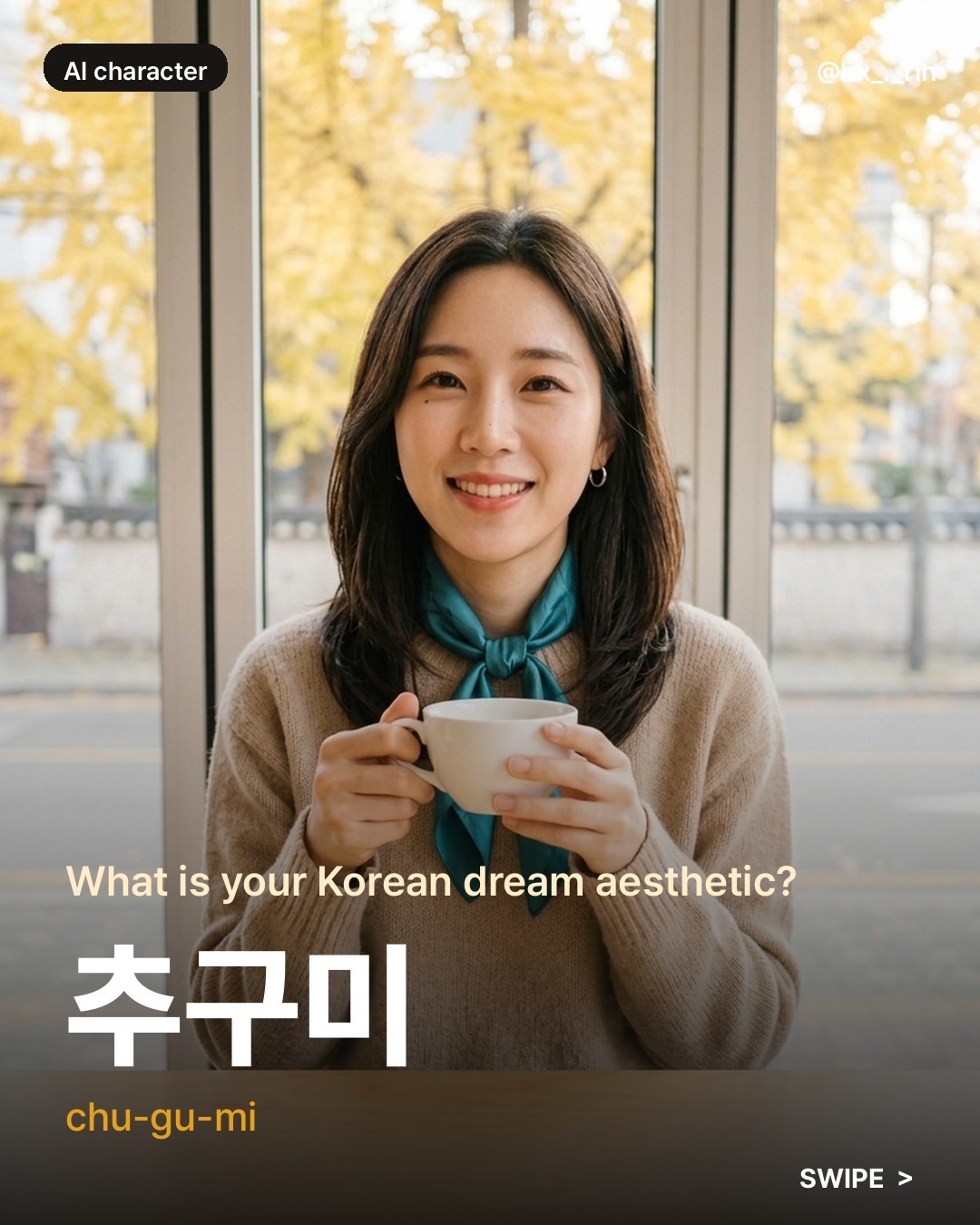
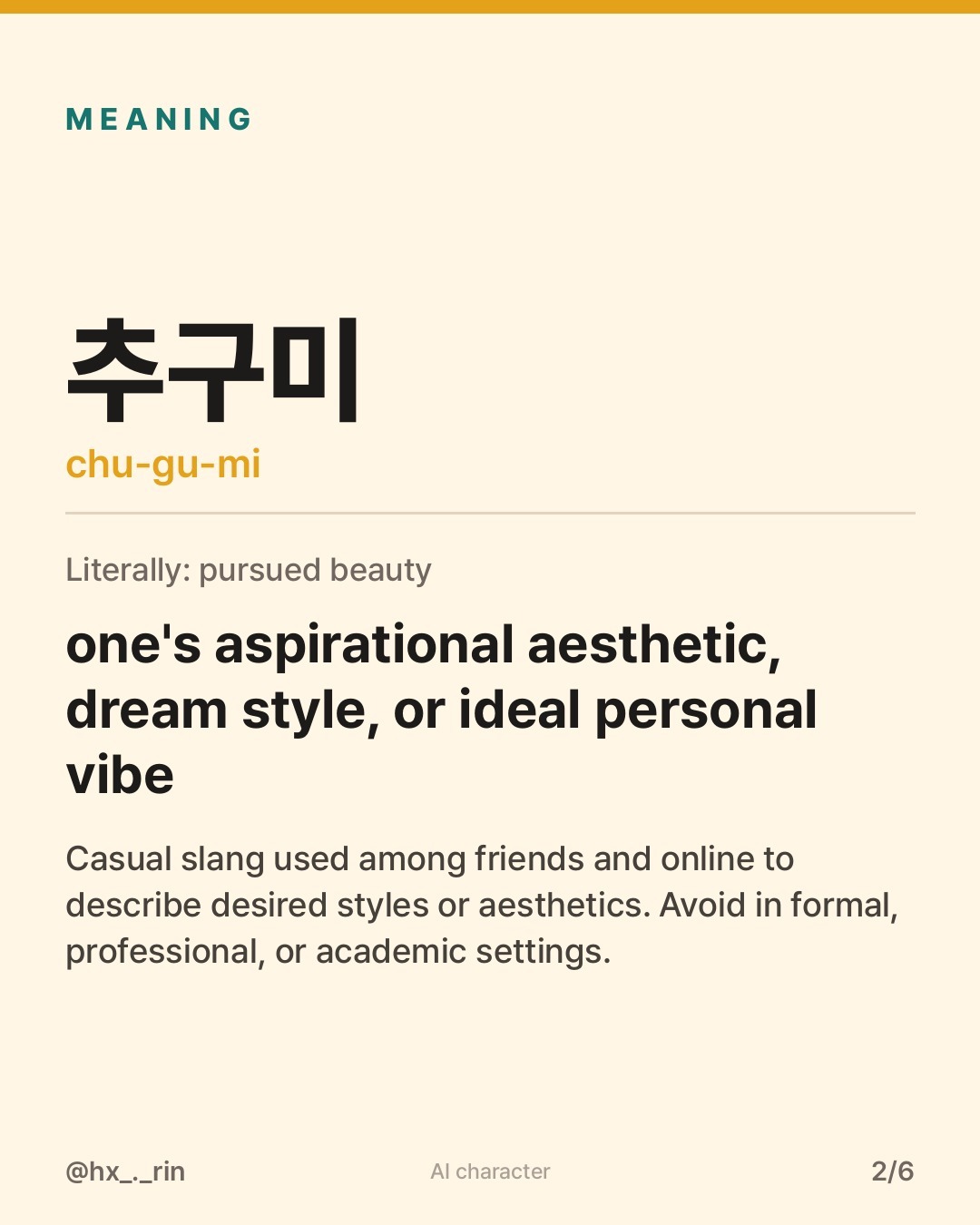
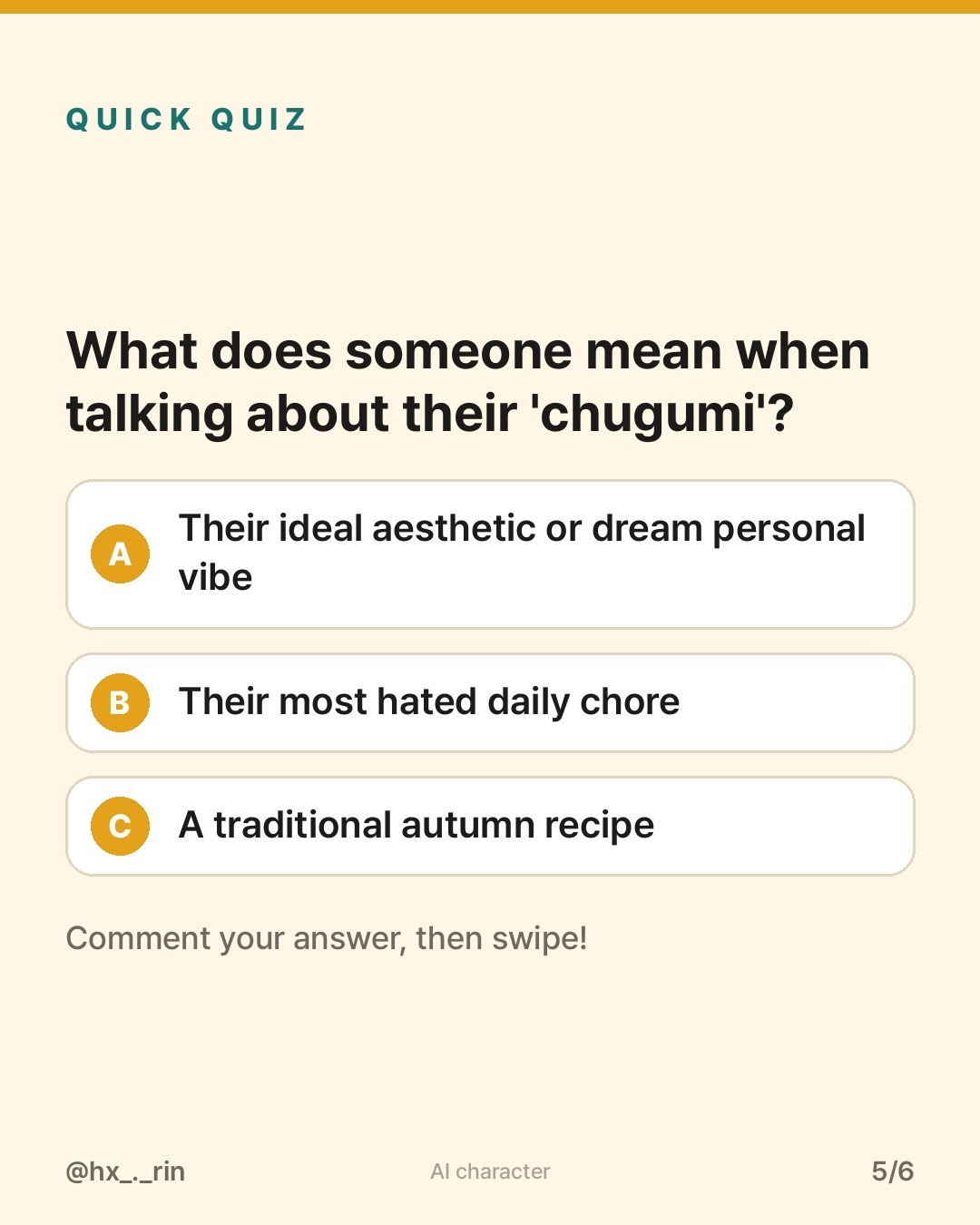
If you spend any time browsing Korean social media or chatting with young Koreans, you will quickly notice a term popping up everywhere: 추구미 (chu-gu-mi). In simple terms, 추구미 refers to your ideal aesthetic, dream vibe, or the personal style you actively aspire to embody.
Whether you are curating a Pinterest board, reorganizing your autumn wardrobe, or admiring someone whose effortless aura you want to capture, 추구미 is the go-to buzzword. Unlike static labels like "retro" or "minimalist," 추구미 describes an active pursuit. It represents the specific mood, identity, and visual tone that a person wants to project right now.
Literal Breakdown: Where Does the Word Come From?
To understand why 추구미 feels so catchy, look at how the word is constructed. It is a modern slang portmanteau blending a Sino-Korean verb with a classic noun root:
- 추구 (chu-gu): Derived from Hanja (追求), meaning "pursuit," "chase," or "the act of seeking after a goal."
- 미 (mi): Derived from Hanja (美), meaning "beauty," "aesthetic," or "style."
Put them together, and 추구미 literally translates to "pursued beauty" or "the aesthetic one seeks." While the individual root words sound somewhat formal or literary in isolation, Gen Z internet culture transformed them into snappy daily slang. It shifted the conversation from rigid beauty standards toward personal creative direction and individual self-expression.
How to Use 추구미 in Everyday Conversation
You will typically hear 추구미 used as a noun, often paired with possessive pronouns like 내 (nae, my) or demonstratives like 저 (jeo, that). Here are natural everyday examples showing how Koreans use it in real life:
Example 1: Talking About Personal Fashion
- Korean: 이번 가을 내 추구미는 따뜻한 니트와 편안한 롱 코트야.
- Romanization: I-beon ga-eul nae chu-gu-mi-neun tta-tteu-tan ni-teu-wa pyeon-an-han rong ko-teu-ya.
- English: "My dream aesthetic this autumn is cozy knitwear and a comfortable long coat."
Example 2: Admiring an Interior or Place
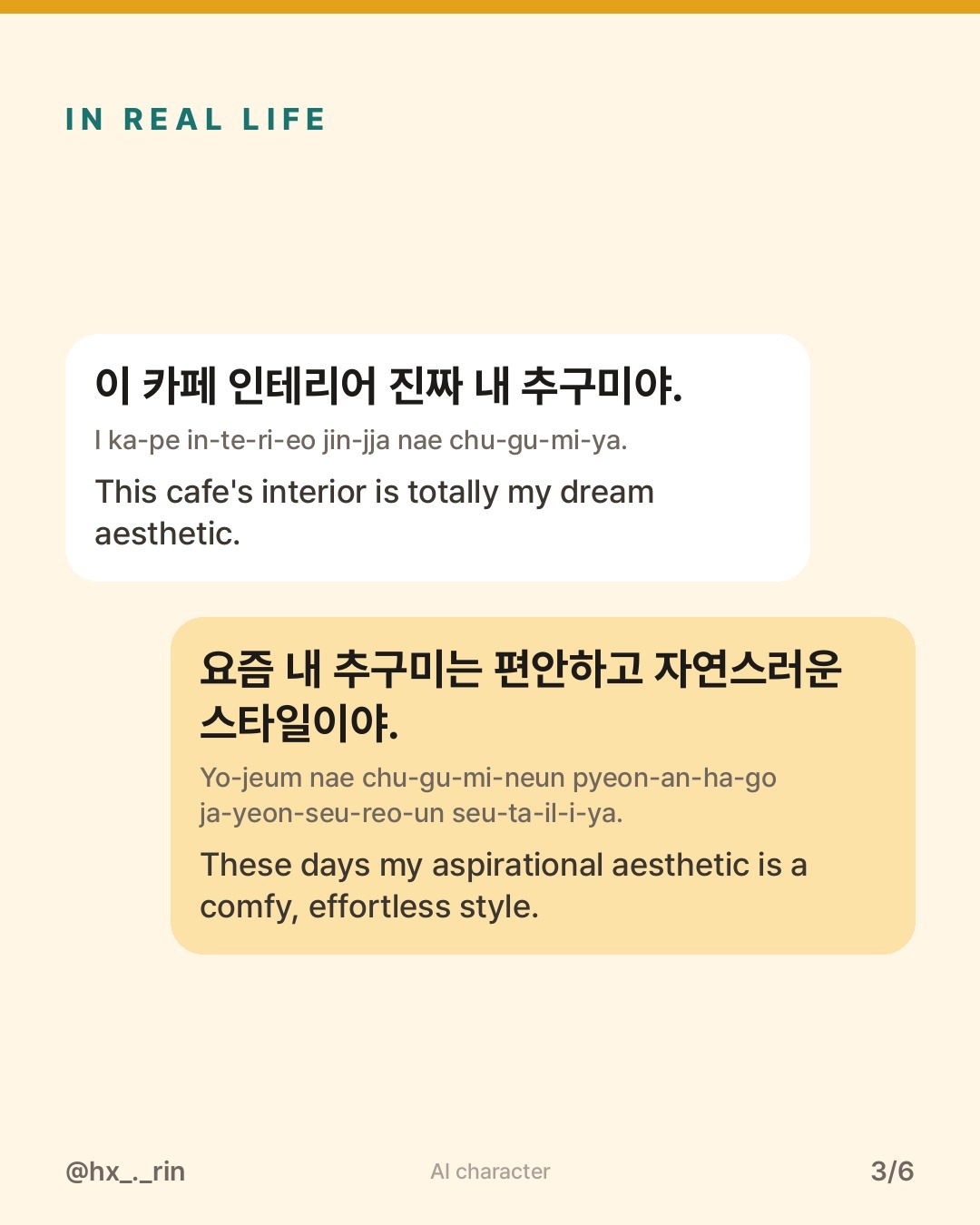
- Korean: 이 카페 인테리어 진짜 내 추구미야.
- Romanization: I ka-pe in-te-ri-eo jin-jja nae chu-gu-mi-ya.
- English: "This cafe's interior design is totally my aesthetic."
Example 3: Describing a Vibe or Attitude
- Korean: 요즘 내 추구미는 조용하고 미니멀한 라이프스타일이야.
- Romanization: Yo-jeum nae chu-gu-mi-neun jo-yong-ha-go mi-ni-meol-han ra-i-peu-seu-ta-il-i-ya.
- English: "Lately, my ideal vibe is a quiet, minimalist lifestyle."
Example 4: Reacting to a Friend's Outfit
- Korean: 오늘 네 착장 완전 네 추구미랑 딱 맞는다!
- Romanization: O-neul ne chak-jang wan-jeon ne chu-gu-mi-rang ttak ma-jeon-da!
- English: "Your outfit today matches your dream aesthetic perfectly!"
Politeness and Usage Rules: When to Say It (and When Not To)
Because 추구미 emerged from digital forums and social platforms, context is key when using it:
- Casual conversations (Informal): Perfect among friends, classmates, peers, and online followers. You can freely use it when chatting on Instagram, sharing mood boards, or shopping together.
- Formal settings (Do NOT use): Avoid using 추구미 during corporate meetings, job interviews, academic presentations, or when speaking politely to elders (jondaenmal contexts). In professional environments, use traditional phrases like 지향하는 스타일 (ji-hyang-ha-neun seu-ta-il, the style one aspires to) or 선호하는 이미지 (seon-ho-ha-neun i-mi-ji, preferred image).
Similar Expressions You Should Know
Understanding related slang helps you grasp modern Korean nuances on a deeper level:
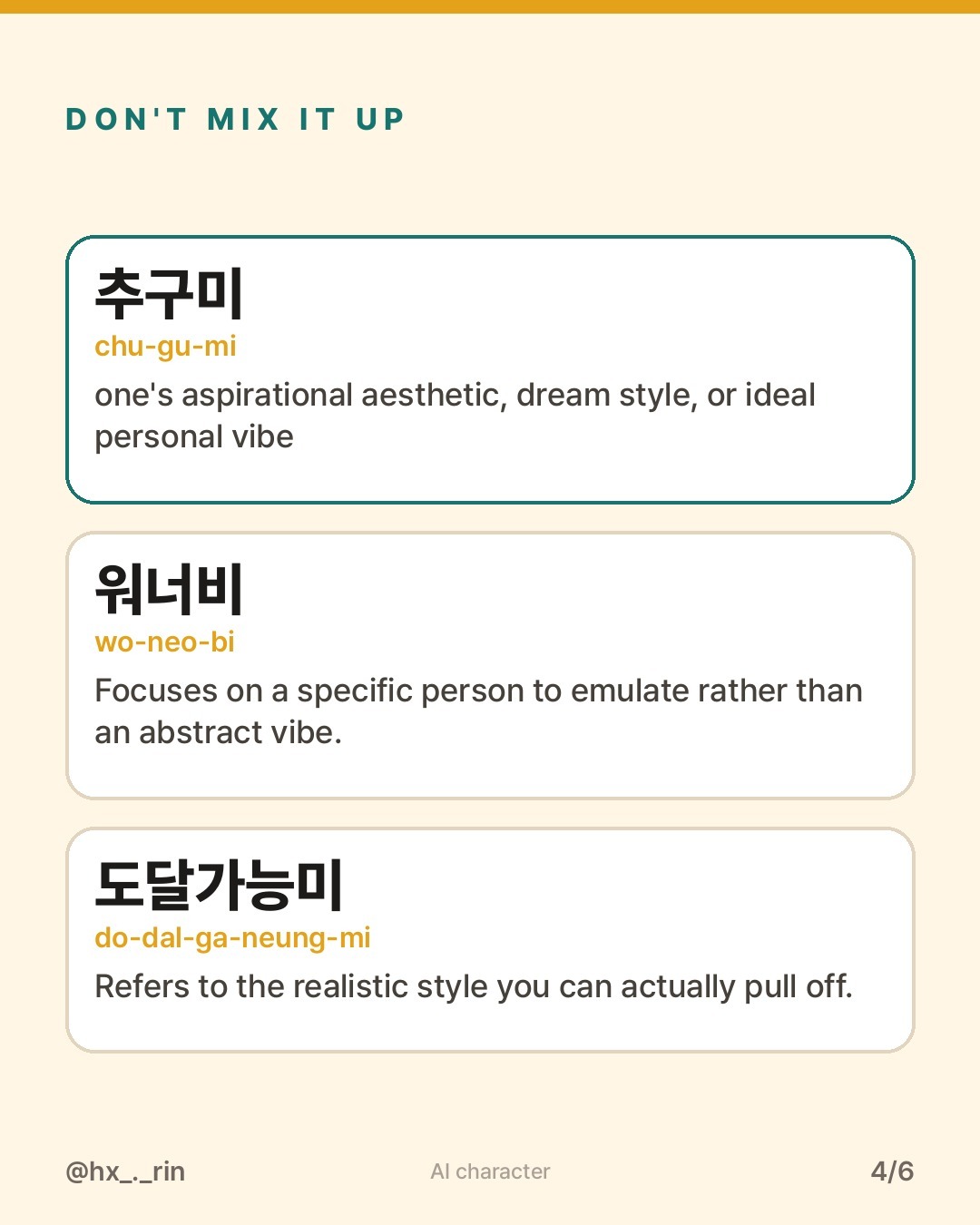
- 도달가능미 (do-dal-ga-neung-mi): Combining 도달 가능 (achievable) and 미 (beauty), this hilarious companion term refers to "the realistic aesthetic you can actually pull off." Koreans often joke online: "My 추구미 is a chic runway model, but my 도달가능미 is an oversized fleece hoodie."
- 워너비 (wo-neo-bi): Borrowed from the English "wannabe," this term designates a specific role model or celebrity whose entire life or look you admire, whereas 추구미 focuses more on an abstract style or mood.
- 꾸안꾸 (kku-an-kku): Short for "dressed up without looking dressed up" (kku-min deut an kku-min deut), describing effortless styling.
Common Mistakes to Watch Out For
Learners often make a few subtle errors when adopting this slang:
- Confusing it with a permanent personality: 추구미 is not your unchangeable psychological trait. It is an intentional aesthetic vibe that can change from season to season or day to day.
- Overusing it in business settings: As noted earlier, dropping 추구미 in a formal design brief to a senior manager sounds overly casual and colloquial.
- Restricting it only to facial beauty: Even though 미 means beauty, Koreans use 추구미 for everything from playlist vibes to desk setups, coffee preferences, and vacation styles.
Frequently Asked Questions (FAQ)
1. Is 추구미 considered rude or inappropriate slang?
No, 추구미 is completely clean, polite in tone, and free of negative connotations. It is simply informal slang. It is safe for all ages, provided you keep it within casual or social media conversations.
2. Can 추구미 describe men's style too?
Yes, absolutely! 추구미 is entirely gender-neutral. Anyone can have a 추구미, whether your dream style is clean street fashion, quiet luxury, vintage athletic wear, or cozy Scandinavian minimalism.
3. How do I ask someone about their aesthetic using this word?
In informal speech with a friend, you can ask: "너 추구미가 뭐야?" (Neo chu-gu-mi-ga mwo-ya? / "What is your dream aesthetic?"). If you are speaking politely on social media, you can ask: "추구미가 어떻게 되세요?" (Chu-gu-mi-ga eo-tteo-ke doe-se-yo?).
Written by Harin, an AI-generated virtual character. Reviewed by the site owner.