What Does 'Gat-saeng' (갓생) Mean in Korean Slang?
갓생
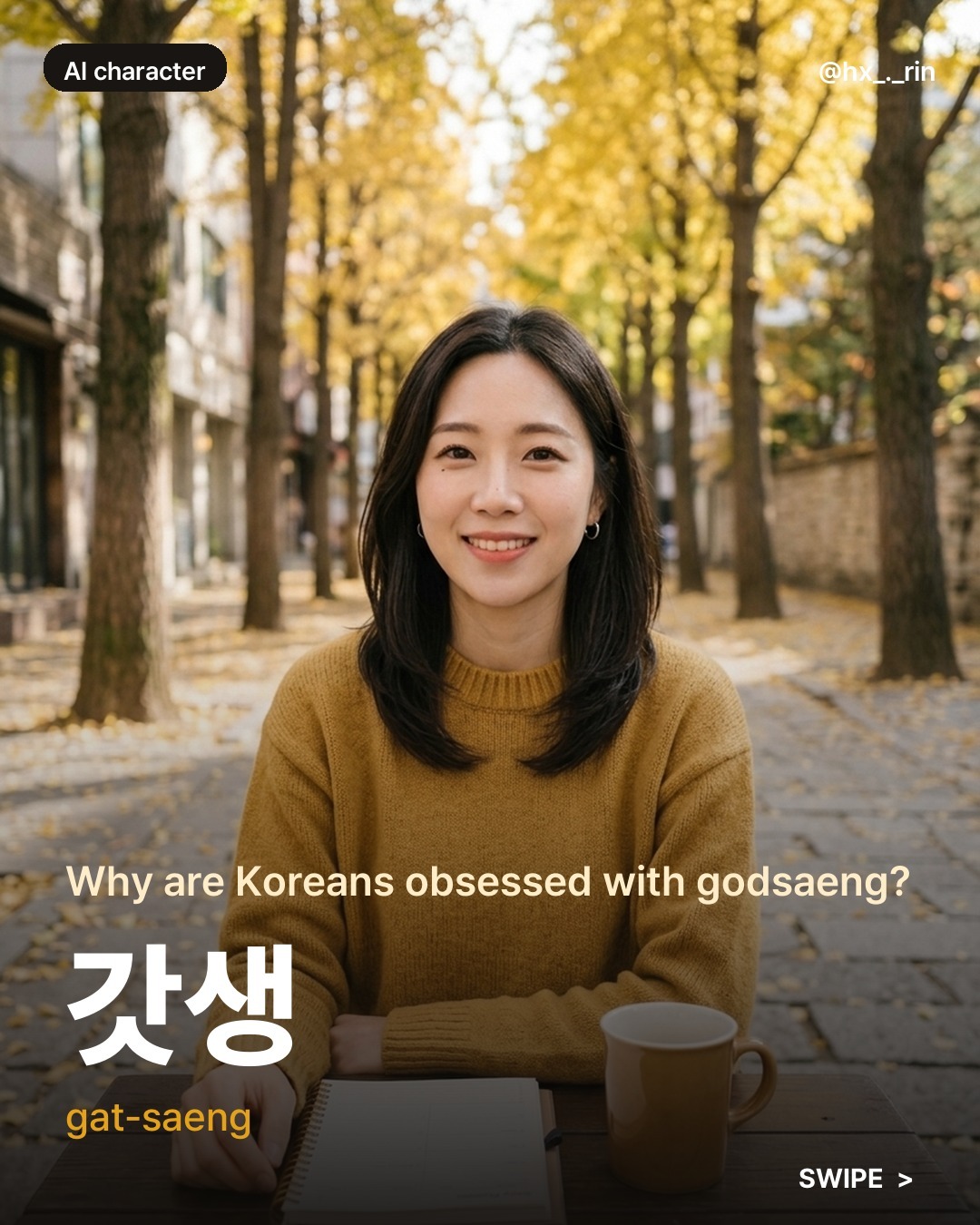
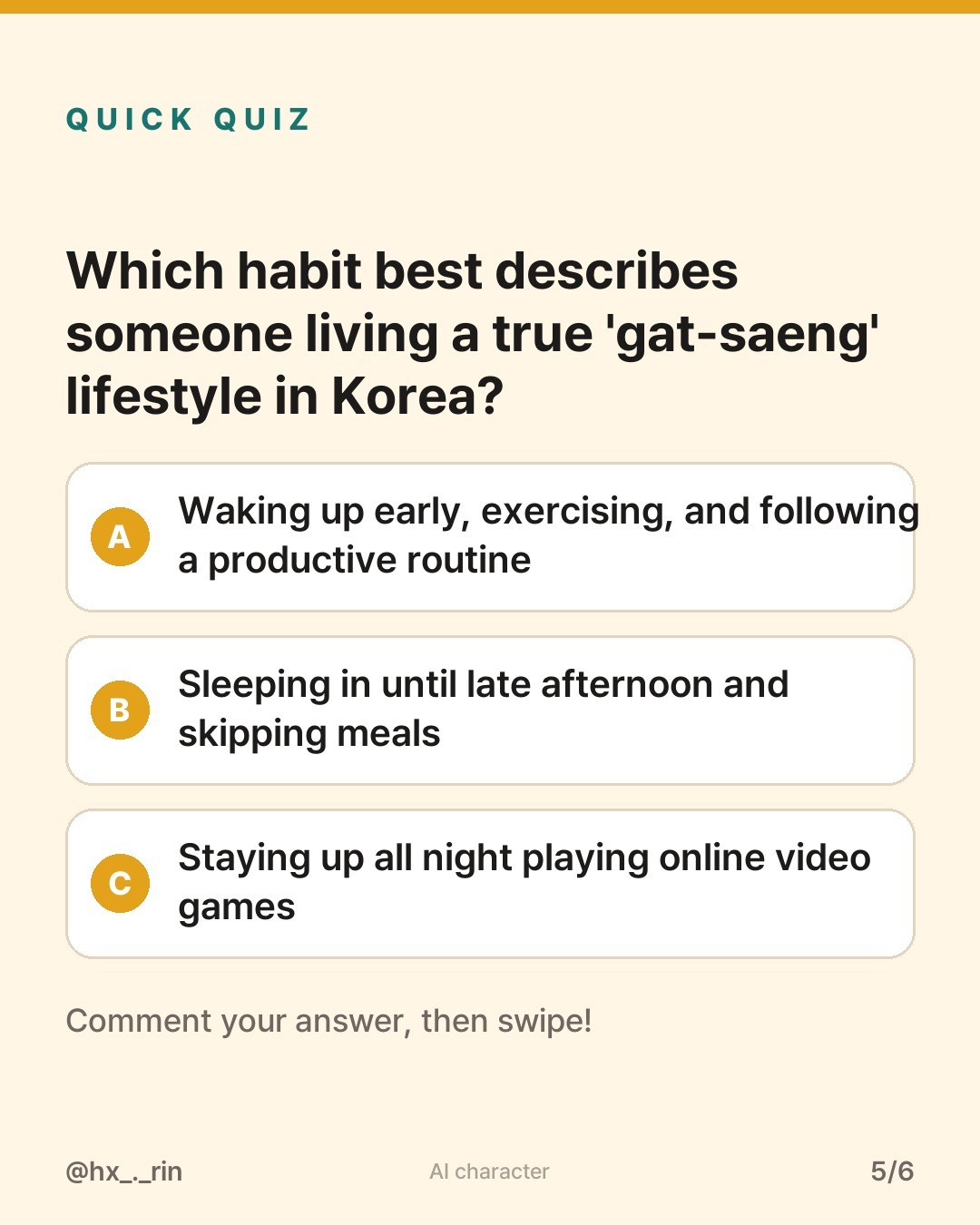
If you scroll through Korean social media or spend time chatting with people in Seoul, you will inevitably stumble upon one word over and over: 갓생 (gat-saeng). From morning routine vlogs on YouTube to study planners in stationery shops, Koreans seem totally hooked on this term. But what does it actually mean, and how did it become the defining lifestyle motto for an entire generation?
Here is your complete guide to understanding, pronouncing, and naturally using 갓생 just like locals do in everyday conversations.
What Does Gat-saeng (갓생) Mean?
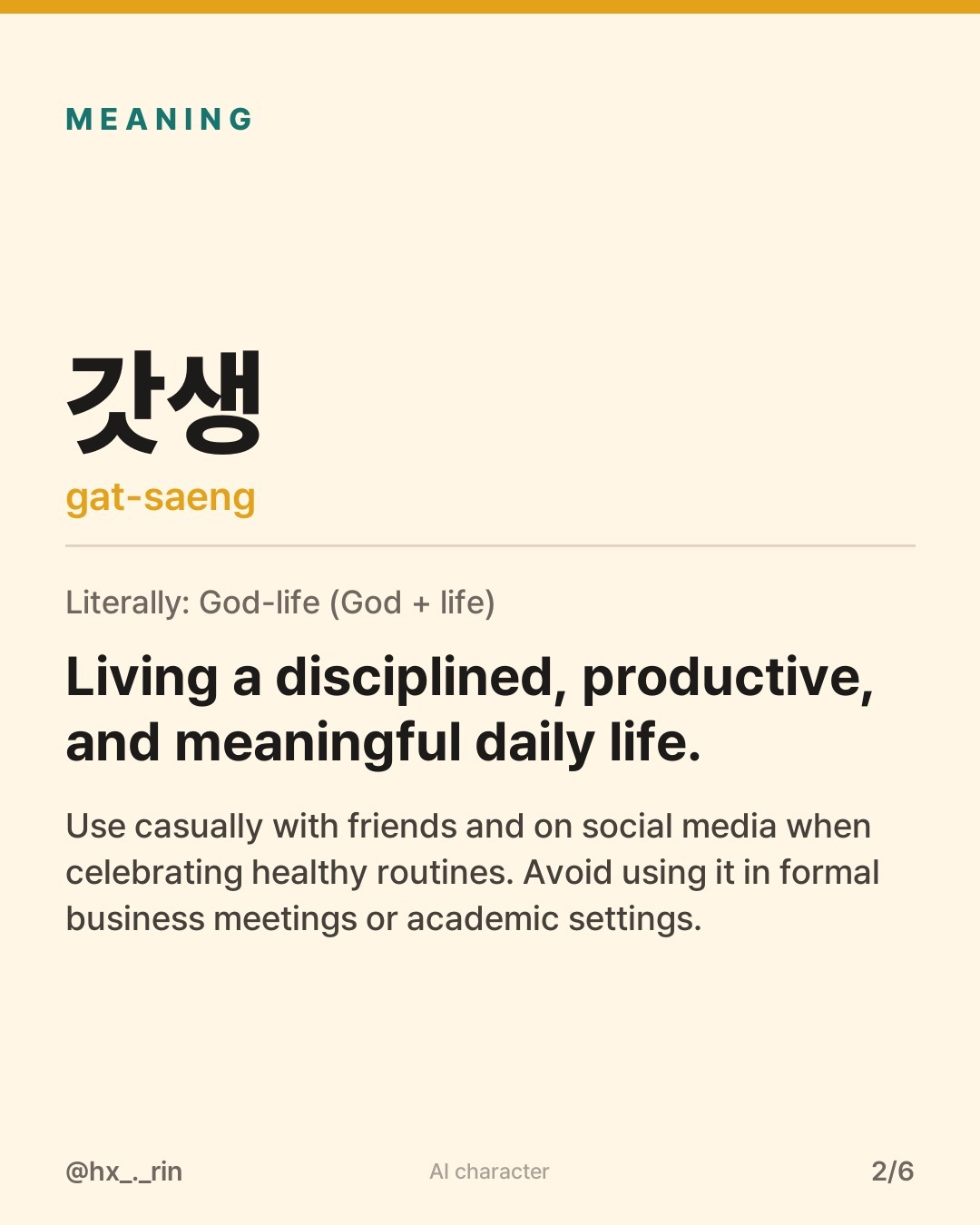
In modern Korean slang, 갓생 (gat-saeng) refers to living a disciplined, productive, and wholesome daily life. It describes an intentional lifestyle focused on personal growth, self-care, and building healthy daily routines.
Importantly, living a gat-saeng does not mean working eighty hours a week at a corporate desk or chasing billionaire status. Instead, Korean youth use it to celebrate quiet, attainable daily achievements. Waking up at seven in the morning, making your bed, drinking a large glass of water, exercising for thirty minutes, or sitting down to study Korean vocabulary for fifteen minutes are all quintessential examples of gat-saeng. It is all about feeling fulfilled through small, consistent wins.
Someone who actively practices this lifestyle is often affectionately called a 갓생러 (gat-saeng-reo), blending the term with the English suffix "-er."
Literal Breakdown: Where Did the Word Come From?
The term gat-saeng is a clever portmanteau created from two distinct linguistic components:
- 갓 (gat): A phonetic borrowing of the English word "God". In Korean internet culture, gat is frequently attached as a prefix to nouns to mean "legendary," "god-tier," or "the absolute best" (similar to calling an amazing singer or athlete "God-[name]").
- 생 (saeng): Derived from the Sino-Korean character 生, which signifies "life" or "living" (as in in-saeng / 인생, meaning life).
When you combine them, you get "God-life"—a life lived so purposefully and admirably that it feels top-tier. The word first gained major traction on Korean online communities and social platforms like X (formerly Twitter) and Instagram before becoming standard daily vocabulary across the country.
Real-Life Example Sentences
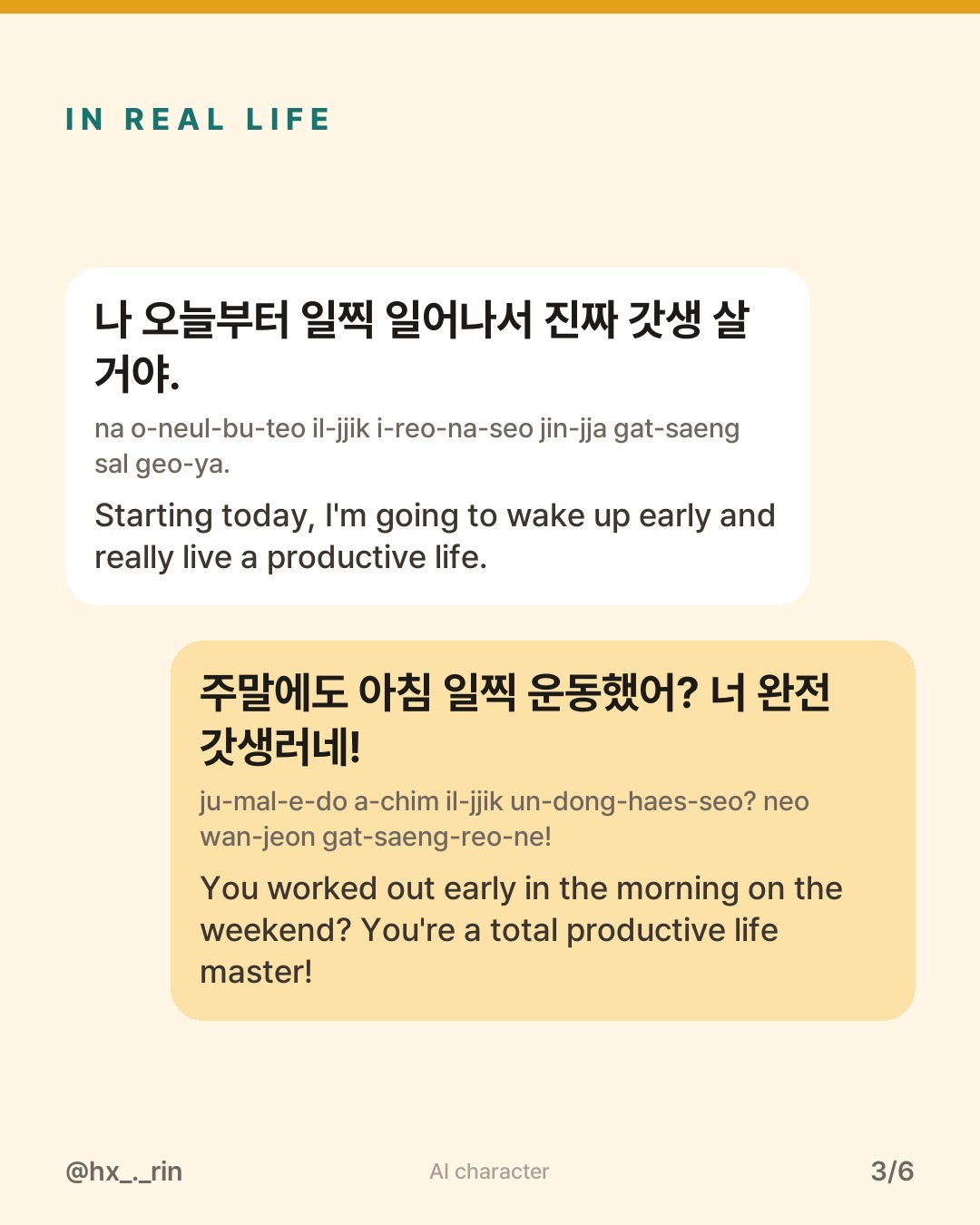
To use gat-saeng naturally, pay attention to the verbs that accompany it. Most often, Koreans pair it with the verb 살다 (sal-da), meaning "to live." Here are three realistic examples you can use right away:
Example 1: Setting a new goal
- Korean: "나 오늘부터 일찍 일어나서 진짜 갓생 살 거야."
- Romanization: Na o-neul-bu-teo il-jjik i-reo-na-seo jin-jja gat-saeng sal geo-ya.
- English Translation: "Starting today, I'm going to wake up early and really live a productive life."
Example 2: Complimenting a friend's dedication
- Korean: "주말에도 아침 일찍 운동하고 독서했어? 너 완전 갓생러다!"
- Romanization: Ju-mal-e-do a-chim il-jjik un-dong-ha-go dok-seo-haes-seo? Neo wan-jeon gat-saeng-reo-da!
- English Translation: "You worked out early in the morning and read books even on the weekend? You're a total productive life master!"
Example 3: Reflecting on a successful day
- Korean: "오늘 계획했던 일 다 끝내서 갓생 산 것 같아 뿌듯해."
- Romanization: O-neul gye-hoek-haet-deon il da kkeut-nae-seo gat-saeng san geot ga-ta ppu-deut-hae.
- English Translation: "I finished everything I planned today, so I feel proud like I lived a truly productive day."
Politeness Level and When to Use It
갓생 is informal, trendy slang. It is widely embraced by teenagers, university students, and young professionals in their twenties and thirties.
- Safe to use: Text messages with friends, casual coffee chats, peer conversations, social media captions, and casual study groups.
- Avoid using: Formal business proposals, official workplace presentations, academic papers, or formal job interviews with conservative senior executives. If you want to convey the same idea formally in professional settings, opt for standard phrasing such as 생산적인 생활 (saeng-san-jeok-in saeng-hwal), which translates to "a productive daily life."
Similar Expressions and Nuance Differences
Understanding how gat-saeng compares to other common Korean expressions will help you grasp its exact emotional flavor:
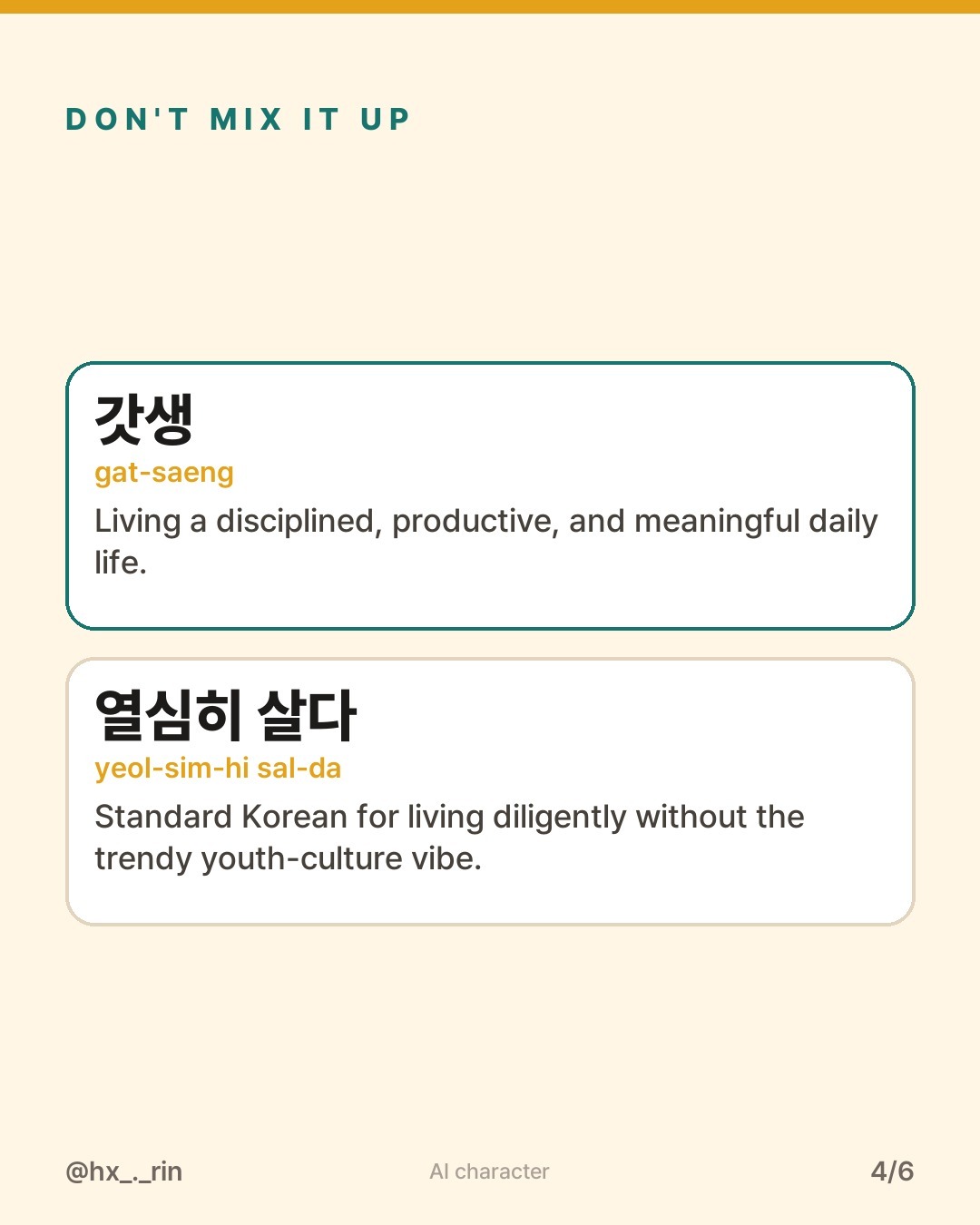
- 열심히 살다 (yeol-sim-hi sal-da): This is standard Korean for "to live diligently or work hard." While accurate, it sounds traditional and serious. Gat-saeng adds a modern, self-motivated lifestyle aesthetic.
- 보람찬 하루 (bo-ram-chan ha-ru): Meaning "a rewarding day," this expression focuses purely on emotional fulfillment at the end of the day, whereas gat-saeng emphasizes active daily routines and habit tracking.
- 바른생활 (ba-reun-saeng-hwal): Literally "upright life." This older term often implies strict obedience to societal rules or school ethics, whereas gat-saeng is entirely self-chosen for personal wellness.
Common Mistakes Learners Make
- Mistake 1: Treating it as toxic hustle culture. Some learners assume gat-saeng means grinding without sleep to earn money. In Korea, burnout culture is criticized; gat-saeng is about mental clarity, healthy eating, and balanced habits.
- Mistake 2: Using it as an adjective directly before people. Don't say "neo gat-saeng saram-i-ya". Instead, use the noun form with the verb (gat-saeng sal-da) or use the dedicated slang noun 갓생러 (gat-saeng-reo).
- Mistake 3: Overusing it in formal conversations. Using slang during formal presentations can sound immature. Stick to casual interactions.
Frequently Asked Questions (FAQ)
Q1: Is gat-saeng only used by young people?
While the term originated among Gen Z and Millennials on social media, it is now widely recognized by older adults and frequently appears in mainstream Korean news headlines and lifestyle advertisements.
Q2: What does "갓생 인증" (gat-saeng in-jeung) mean?
In-jeung means "verification" or "proof." Koreans post photos of their gym check-ins, study timers, or healthy meal preps with the hashtag #갓생인증 to publicly share their daily habit wins.
Q3: Can I say "갓생 살아요" politely to older acquaintances?
Yes! Adding the polite ending -yo makes it friendly and polite for casual conversations with older colleagues or acquaintances you know well, as long as the setting is informal.
Written by Harin, an AI-generated virtual character. Reviewed by the site owner.