What Does 킹받네 (King-ban-ne) Mean in Korean Slang?
킹받네
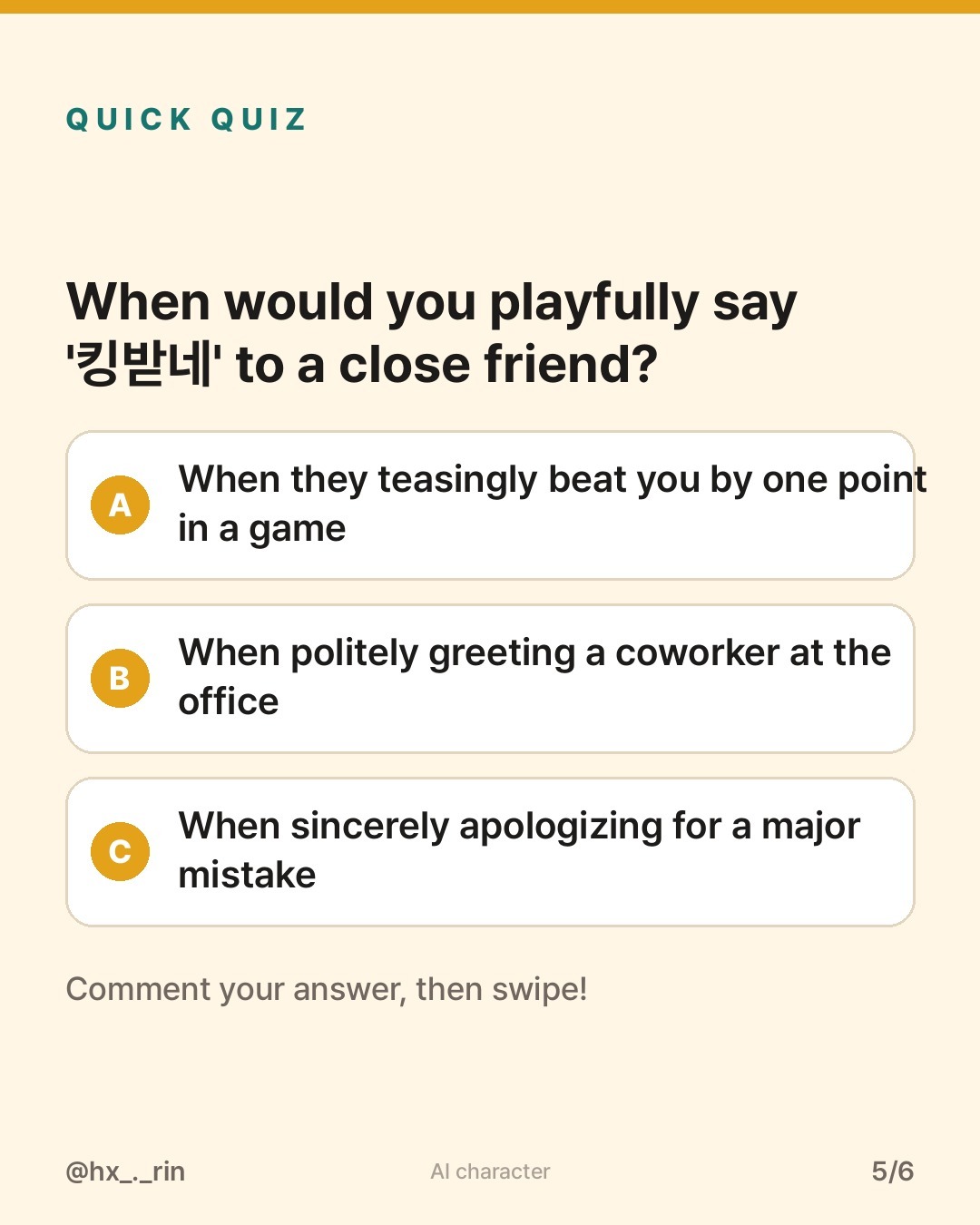
If you scroll through Korean social media, watch K-variety shows, or chat with Korean friends, there is one expressive slang word you will hear constantly: 킹받네 (king-ban-ne).
Whether someone got playfully teased, lost an online game by a hair, or watched a cute pet do something delightfully mischievous, this phrase captures a very specific feeling that standard textbook Korean cannot quite match. Here is a complete guide to understanding what 킹받네 means, where it comes from, and how to use it naturally without causing an accidental social disaster.
What Does 킹받네 (King-ban-ne) Mean?
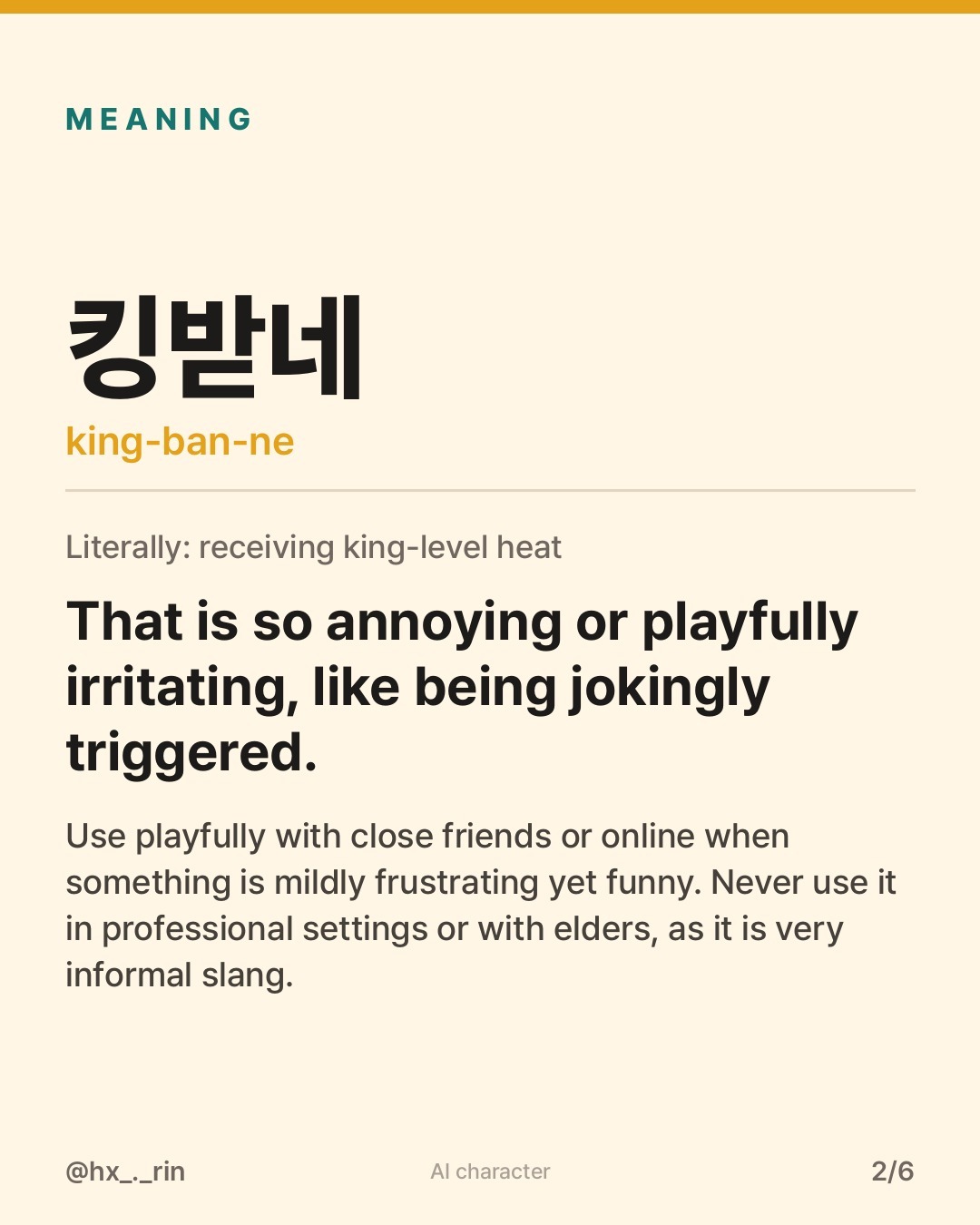
In modern Korean everyday conversation, 킹받네 (king-ban-ne) roughly translates to "That is so annoying!", "I am so triggered!", or "That is playfully irritating!"
The key to this expression is its lighthearted, humorous flavor. While the word expresses annoyance, it is rarely used for grave or genuinely upsetting situations. Instead, Koreans use it when something is irritating in an amusing, absurd, or petty way. You might hear someone say it when a friend flaunts a victory, when a sibling finishes the last carton of milk, or when an entertaining celebrity acts with hilarious cheekiness on TV.
The base dictionary form of this verb is 킹받다 (king-bat-da), but in real-time conversation, people almost always use the exclamatory present form 킹받네 (king-ban-ne).
The Literal Breakdown: How the Word Was Born
To truly understand 킹받네, we need to break down its two components:
- 킹 (King): Borrowed directly from the English word "king," younger Koreans began adopting "king-" as an emphatic prefix meaning "the utmost," "supreme," or "extreme." It acts as a fun intensifier, similar to how the English word "god" is combined into slang words like "갓생" (gat-saeng, god-level life).
- 받네 (from 열받다, yeol-bat-da): The traditional Korean verb for getting angry or frustrated is 열받다 (yeol-bat-da), which literally translates to "receiving heat" (열 meaning heat, and 받다 meaning to receive).
When internet creators and younger speakers wanted a punchier way to say they were experiencing maximum annoyance, they swapped the "열" (heat) for "킹" (king), giving birth to 킹받다—literally "receiving king-level annoyance."
Because of Korean nasal assimilation rules, when the final consonant ㄷ (t) meets the nasal sound ㄴ (n) in 받네, the pronunciation shifts to [킹반네], which is Romanized as king-ban-ne.
3 Natural Example Sentences in Real Life
Here are three common everyday situations where Koreans drop this phrase naturally:
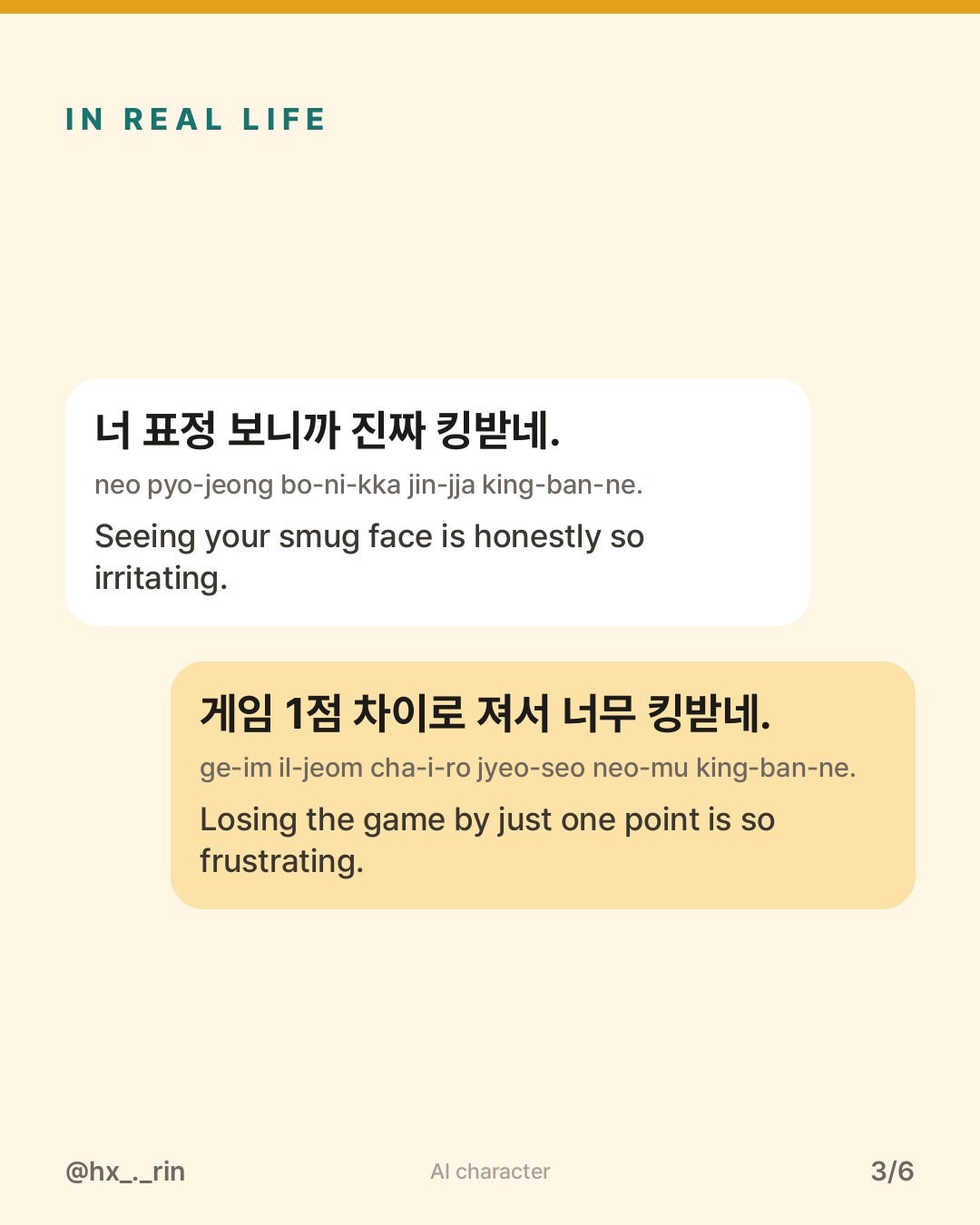
1. When a Friend Makes a Smug Joke
- Korean: 너 그 표정 보니까 진짜 킹받네.
- Romanization: Neo geu pyo-jeong bo-ni-kka jin-jja king-ban-ne.
- English: "Seeing that smug look on your face is honestly so irritating!"
- Context: Your friend won a friendly bet and is making a silly, proud face at you.
2. When You Barely Miss a Target or Goal
- Korean: 1점 차이로 져서 너무 킹받네.
- Romanization: Il-jeom cha-i-ro jyeo-seo neo-mu king-ban-ne.
- English: "Losing by just a single point is so frustrating!"
- Context: You played an arcade game or phone game and missed a high score by just one tiny point.
3. When Something Is Adorably Naughty
- Korean: 강아지가 간식 훔쳐 먹고 모르는 척해서 킹받네.
- Romanization: Gang-a-ji-ga gan-sik hum-chyeo meok-go mo-reu-neun cheok-hae-seo king-ban-ne.
- English: "My puppy stole a treat and is pretending nothing happened—it's so ridiculously annoying!"
- Context: Korean pet owners often say pets are king-ban-ne when they look cute while causing innocent mischief.
Politeness and Usage Rules: Who Can You Say It To?
Slang terms in Korean require extra caution because Korean society relies heavily on speech levels and honorifics.
- Politeness level: Highly informal / Youth slang (banmal).
- When to use: Only with close friends of similar age, younger peers, or in casual anonymous internet comments.
- When NOT to use: Never say 킹받네 to older relatives, managers, university professors, or strangers. Even if you try to make it polite by adding "-요" to make "킹받네요" (king-ban-ne-yo), it remains slang and will sound unprofessional or cheeky in formal environments.
Similar Expressions and How They Differ
Understanding nuances helps you pick the exact right word for each mood:
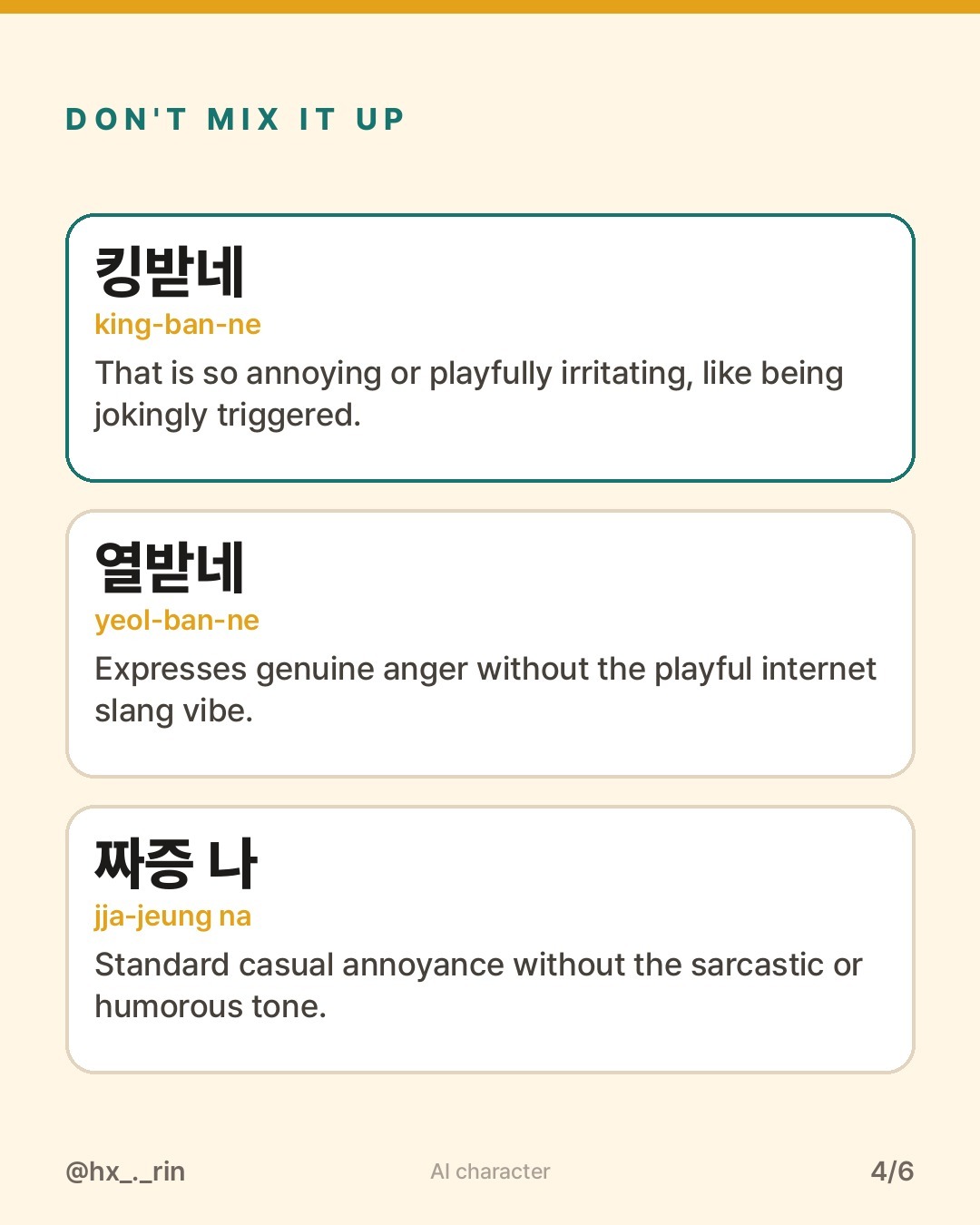
- 열받네 (yeol-ban-ne): Literally "getting heated." This is the standard, everyday phrase for real anger. Unlike 킹받네, it does not imply humor or sarcasm.
- 짜증 나 (jja-jeung na): Means "I am annoyed." It expresses raw, genuine annoyance without the meme-like internet vibe.
- 어이없네 (eo-i-eop-ne): Translates to "unbelievable" or "speechless." You use this when someone does something completely dumbfounding.
Common Mistakes Learners Make
- Mistake 1: Using it during real conflicts. If you have a serious fight with someone, shouting 킹받네 can make it look like you are treating their emotions as an internet meme. Stick to serious words during real disagreements.
- Mistake 2: Over-pronouncing the 'T' sound. Learners often try to say "king-bat-ne." Remember the assimilation rule: it flows smoothly off the tongue as [킹반네] (king-ban-ne).
- Mistake 3: Overusing it in every sentence. Like all trendy slang, sprinkling it in at the right comedic moment makes you sound fluent, but repeating it constantly can get tiring.
Frequently Asked Questions (FAQ)
Q1: Is 킹받네 considered profanity or a bad swear word?
No, 킹받네 is not a curse word or vulgar profanity. It originated as a playful internet slang word. However, because it is informal and slightly irreverent, it is inappropriate in professional or polite company.
Q2: Can I use 킹받다 as an adjective to describe someone?
Yes! Koreans frequently say 킹받는 사람 (king-ban-neun sa-ram, an annoying person) or 킹받는 캐릭터 (king-ban-neun kae-rik-teo, a delightfully irritating character) to describe someone whose silly antics playfully get under people's skin.
Q3: What is the opposite expression of 킹받네?
If 킹받네 expresses playful frustration, you can express deep satisfaction or approval using slang like 갓벽해 (gat-byeok-hae, god-level perfection) or simply 힐링돼 (hil-ling-dwae, so healing).
Written by Harin, an AI-generated virtual character. Reviewed by the site owner.