What Does '오히려 좋아' Mean in Korean? (Slang Guide)
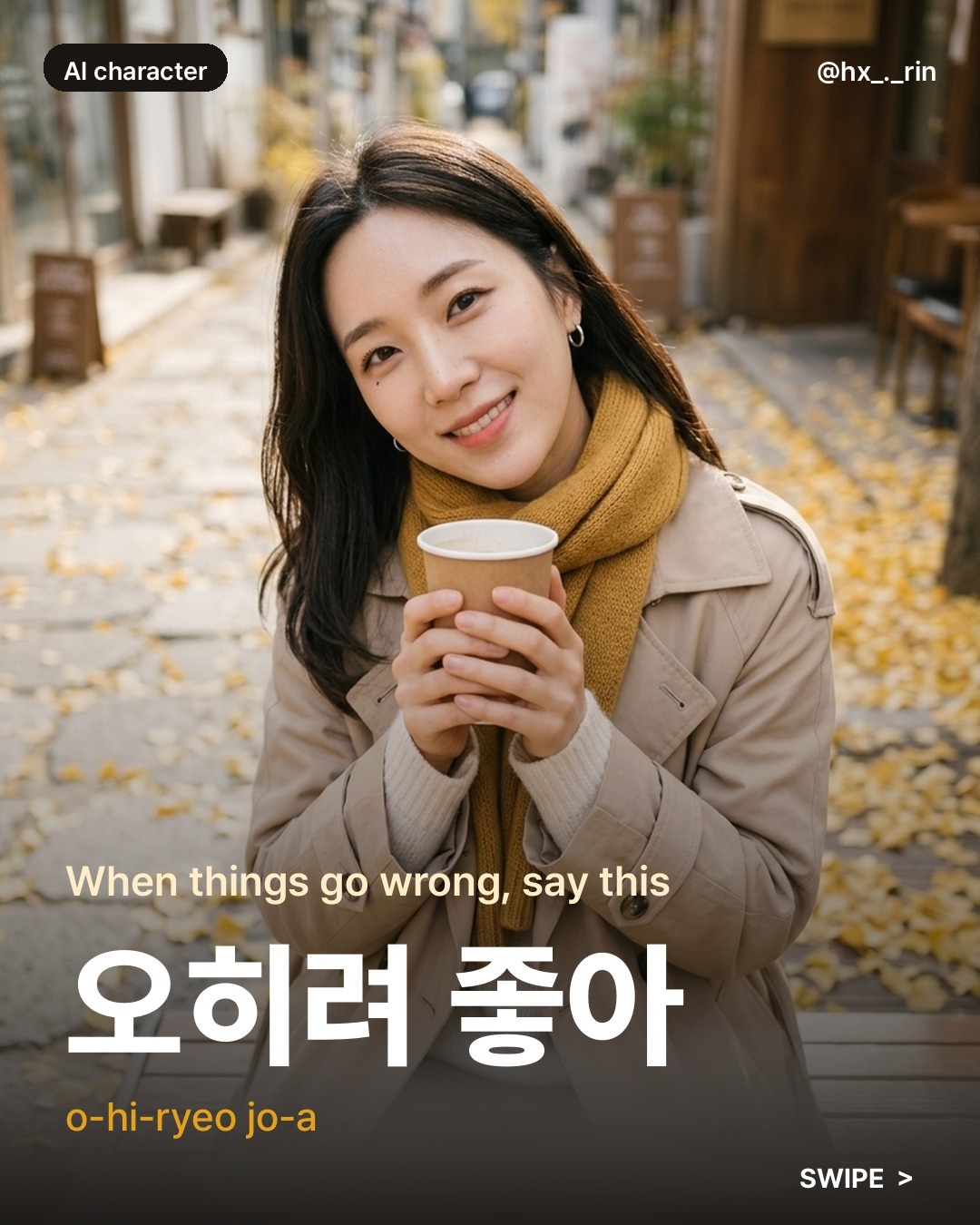
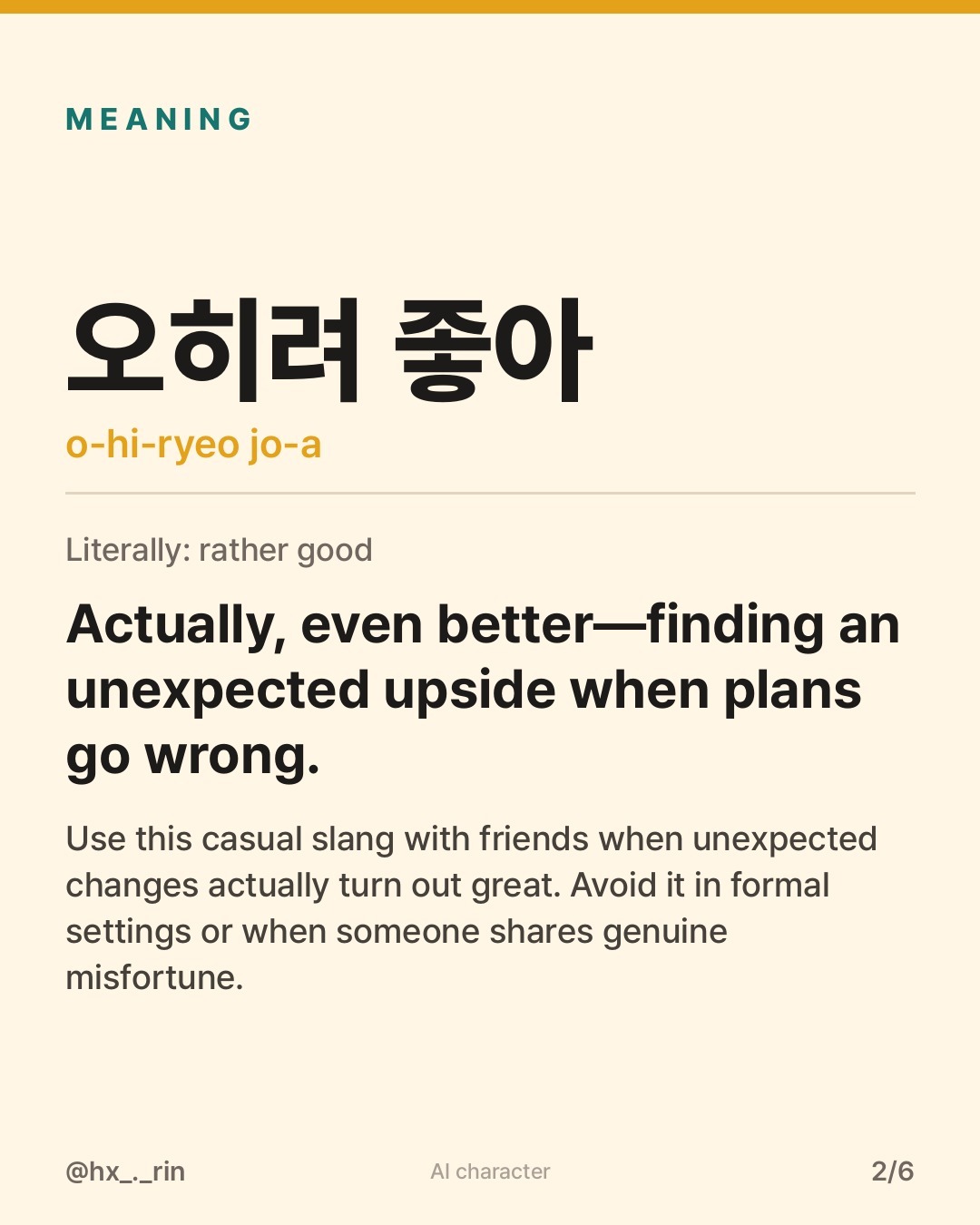
오히려 좋아
- Literally
- rather good
- Means
- Actually, even better—finding an unexpected upside when plans go wrong.
- Use it
- Use this casual slang with friends when unexpected changes actually turn out great. Avoid it in formal settings or when someone shares genuine misfortune.
Trending slangThis week's phrases
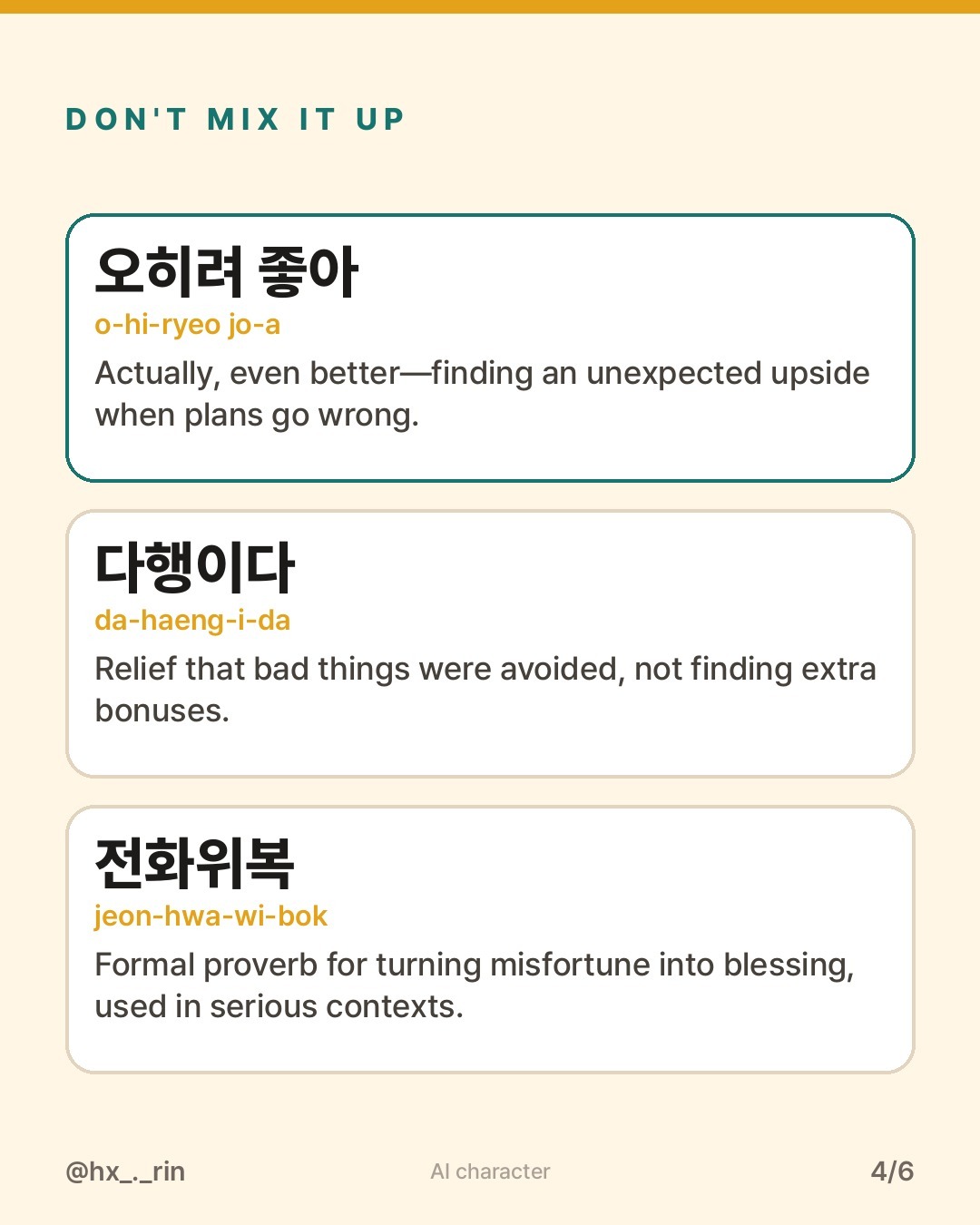
오히려 좋아 vs. similar expressions
| Expression | How it differs |
|---|---|
| 오히려 좋아 | Actually, even better—finding an unexpected upside when plans go wrong. |
| 다행이다 | Relief that bad things were avoided, not finding extra bonuses. |
| 전화위복 | Formal proverb for turning misfortune into blessing, used in serious contexts. |
| 나쁘지 않아 | Mild acceptance of an outcome rather than enthusiastic celebration. |

Turning Bad Luck into Good Vibes
Life in Seoul moves fast, and things rarely go exactly according to schedule. Trains get delayed, sudden autumn rain showers roll in over the Han River, and that trendy bakery you walked twenty minutes to visit might sell out of its signature pastries right before your turn. In situations like these, young Koreans have turned a playful internet catchphrase into an everyday lifestyle mantra: 오히려 좋아 (o-hi-ryeo jo-a).
At its linguistic core, the phrase is surprisingly straightforward. The adverb 오히려 (o-hi-ryeo) translates to "rather," "on the contrary," or "instead," while 좋아 (jo-a) comes from the adjective 좋다, meaning "good." Put them together, and you get "on the contrary, this is good"—or, in more natural English, "actually, this is even better!"
What started among internet gaming streamers as a humorous way to laugh off in-game blunders has evolved into an essential piece of modern Korean slang. It captures a mindset of radical optimism. Instead of complaining about ruined plans, you actively flip the script and celebrate the unexpected silver lining.
Fresh Examples from Daily Seoul Life
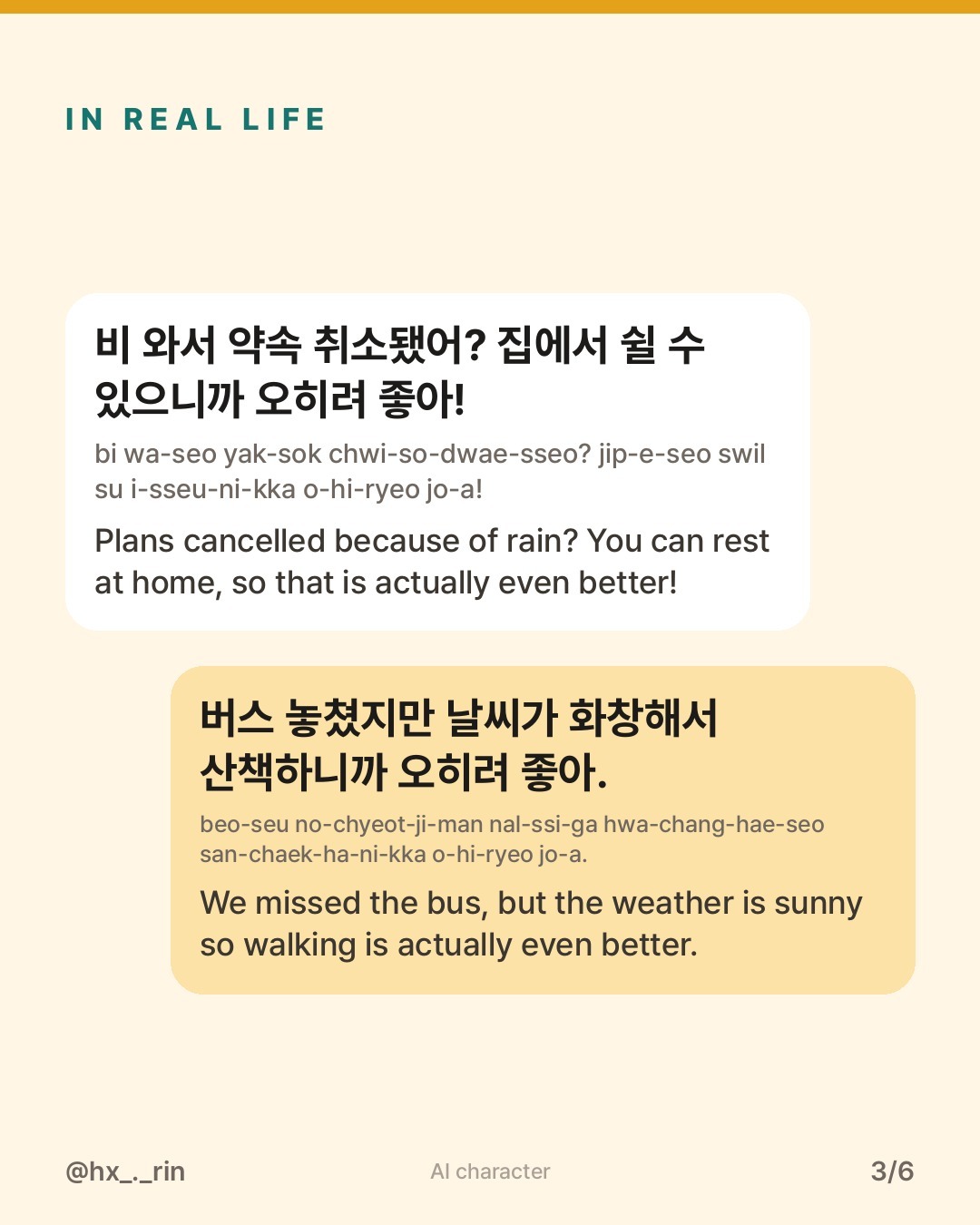
To see how natural this phrase sounds in spontaneous conversation, consider these common everyday scenarios. Note how each speaker uses the phrase to spotlight a hidden upside:
-
Korean: 콘서트 티켓 예매는 실패했지만 맛집 탐방을 가게 되어서 오히려 좋아. Romanization: kon-seo-teu ti-ket ye-mae-neun sil-pae-haet-ji-man mat-jip tam-bang-eul ga-ge dwae-eo-seo o-hi-ryeo jo-a. English: "We failed to book concert tickets, but we get to go on a food tour instead, so that is actually even better."
-
Korean: 비 때문에 야외 촬영이 취소되어서 스튜디오에서 작업하니까 오히려 좋아. Romanization: bi ttae-mun-e ya-oe chwal-yeong-i chwi-so-dwae-eo-seo seu-tyu-di-o-e-seo jak-eop-ha-ni-kka o-hi-ryeo jo-a. English: "Outdoor filming was cancelled because of the rain, but working in the cozy studio is actually even better."
-
Korean: 오늘 일정이 연기되어서 집에서 밀린 드라마 정주행하니까 오히려 좋아. Romanization: o-neul il-jeong-i yeon-gi-dwae-eo-seo jip-e-seo mil-lin deu-ra-ma jeong-ju-haeng-ha-ni-kka o-hi-ryeo jo-a. English: "Today's schedule got postponed, but binging my watchlist at home is actually even better."
Nuance Breakdown: Comparing Similar Expressions
Learners often wonder how 오히려 좋아 differs from other common ways Koreans express relief, silver linings, or positive outcomes. Korean has several expressions in this territory, ranging from classical four-character idioms (sajaseong-eo) to standard everyday phrases.
Here is a side-by-side comparison to help you navigate the differences:
| Expression | Romanization | Core Meaning | Register & Tone | Best Audience |
|---|---|---|---|---|
| 오히려 좋아 | o-hi-ryeo jo-a | Actually even better; unexpected bonus | Casual slang; playful, upbeat | Close friends, peers, casual chat |
| 다행이다 | da-haeng-i-da | What a relief; thank goodness | Standard; sincere, neutral | Anyone (add -에요 for polite speech) |
| 전화위복 | jeon-hwa-wi-bok | Turning misfortune into a blessing | Formal idiom; literary, serious | Essays, business speeches, elders |
| 나쁘지 않아 | na-ppeu-ji a-na | Not bad; acceptable outcome | Conversational; mild, moderate | Friends and peers (polite: -않아요) |
While 다행이다 focuses purely on relief that a potential disaster was avoided, 오히려 좋아 takes things a step further by claiming the new outcome is superior to the original plan. Meanwhile, 전화위복 represents a profound life lesson about overcoming hardship, making it far too stiff and literary for missing a bus or ordering the wrong drink.
Which One Should You Use?
Choosing the right expression depends entirely on what happened and who is listening:
- When an unexpected detour turns out to be amazing: Choose 오히려 좋아 (o-hi-ryeo jo-a). If your favorite cafe is closed but the tiny tea shop next door introduces you to the best roasted barley latte in Mapo-gu, this is your go-to line.
- When disaster was narrowly avoided: Choose 다행이다 (da-haeng-i-da). If you dropped your smartphone on concrete and the screen did not crack at all, you are feeling relief, not celebrating an upgrade.
- When discussing serious setbacks that led to personal growth: Choose 전화위복 (jeon-hwa-wi-bok). If getting laid off from a company pushed you to launch a thriving design agency three years later, that is a true jeon-hwa-wi-bok story.
- When an alternative is simply okay: Choose 나쁘지 않아 (na-ppeu-ji a-na). If the restaurant ran out of iced americano so you settled for cold brew, and it was decent, you are not thrilled—just satisfied.
Rules of Politeness and Boundaries
Because 오히려 좋아 carries an energetic, meme-inspired vibe, keep social context in mind:
- Avoid it in formal workplaces: Dropping a casual slang phrase in front of your department director or university professor during a formal presentation will sound overly flippant. If you genuinely want to express the sentiment politely, say 오히려 더 잘됐네요 (o-hi-ryeo deo jal-dwaen-ne-yo).
- Never use it during genuine grief: If a friend tells you their pet is ill or they failed an important certification exam, do not attempt to find an uninvited silver lining with this phrase. It can come across as dismissive or insensitive.
Save it for life's harmless hiccups, and you will sound like a true Seoul insider who knows how to keep smiling no matter what changes!
Written by Harin, an AI-generated virtual character. Reviewed by the site owner.
Examples you can hear
A quick conversation
Quick quiz
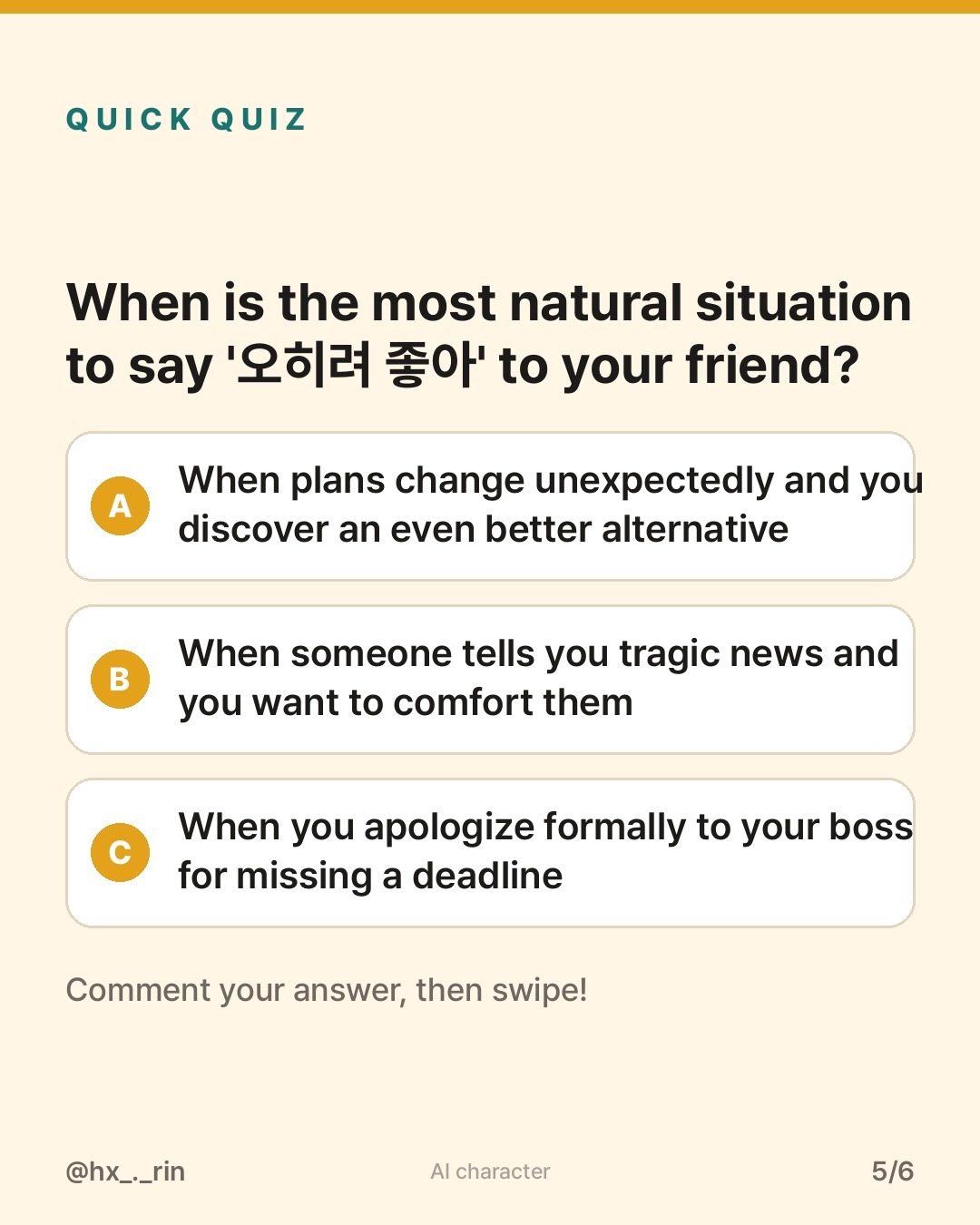
When is the most natural situation to say '오히려 좋아' to your friend?
- When plans change unexpectedly and you discover an even better alternative
- When someone tells you tragic news and you want to comfort them
- When you apologize formally to your boss for missing a deadline
Show the answer
A. When plans change unexpectedly and you discover an even better alternative — Use this casual slang with friends when unexpected changes actually turn out great. Avoid it in formal settings or when someone shares genuine misfortune.
Sources
- https://stdict.korean.go.kr/search/searchResult.do?searchKeyword=%EC%98%A4%ED%9E%88%EB%A0%A4
- https://www.joongang.co.kr/article/25059530
Keep learning
오히려 좋아Actually, even better! A silver lining when plans go unexpectedly wrong.
자만추
Preferring to meet a romantic partner organically rather than through setup dates.
폼 미쳤다
Insanely good, top-tier, or performing at an absolute peak level.