What Does Jal Butakdeurimnida Mean in Korean Culture?
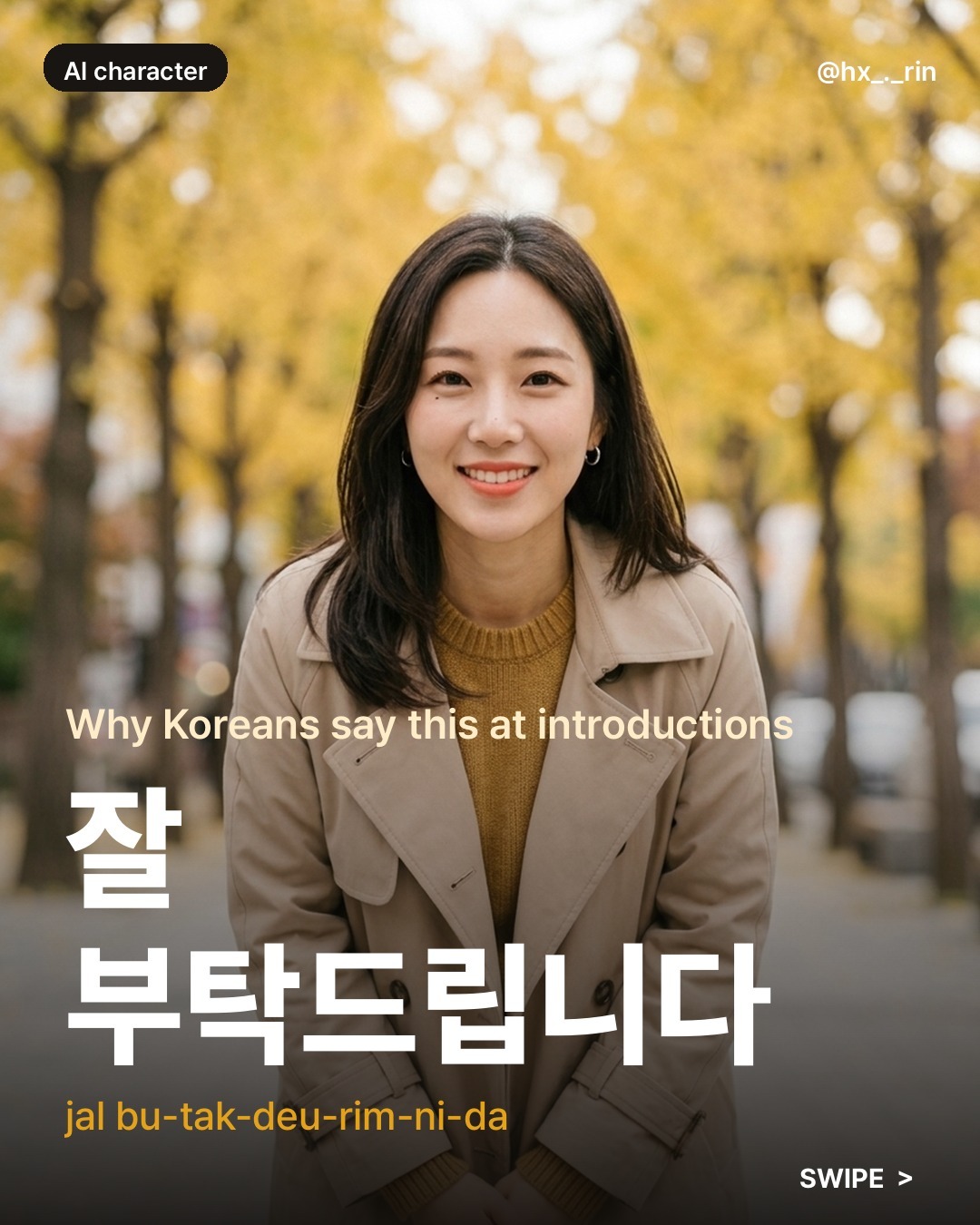
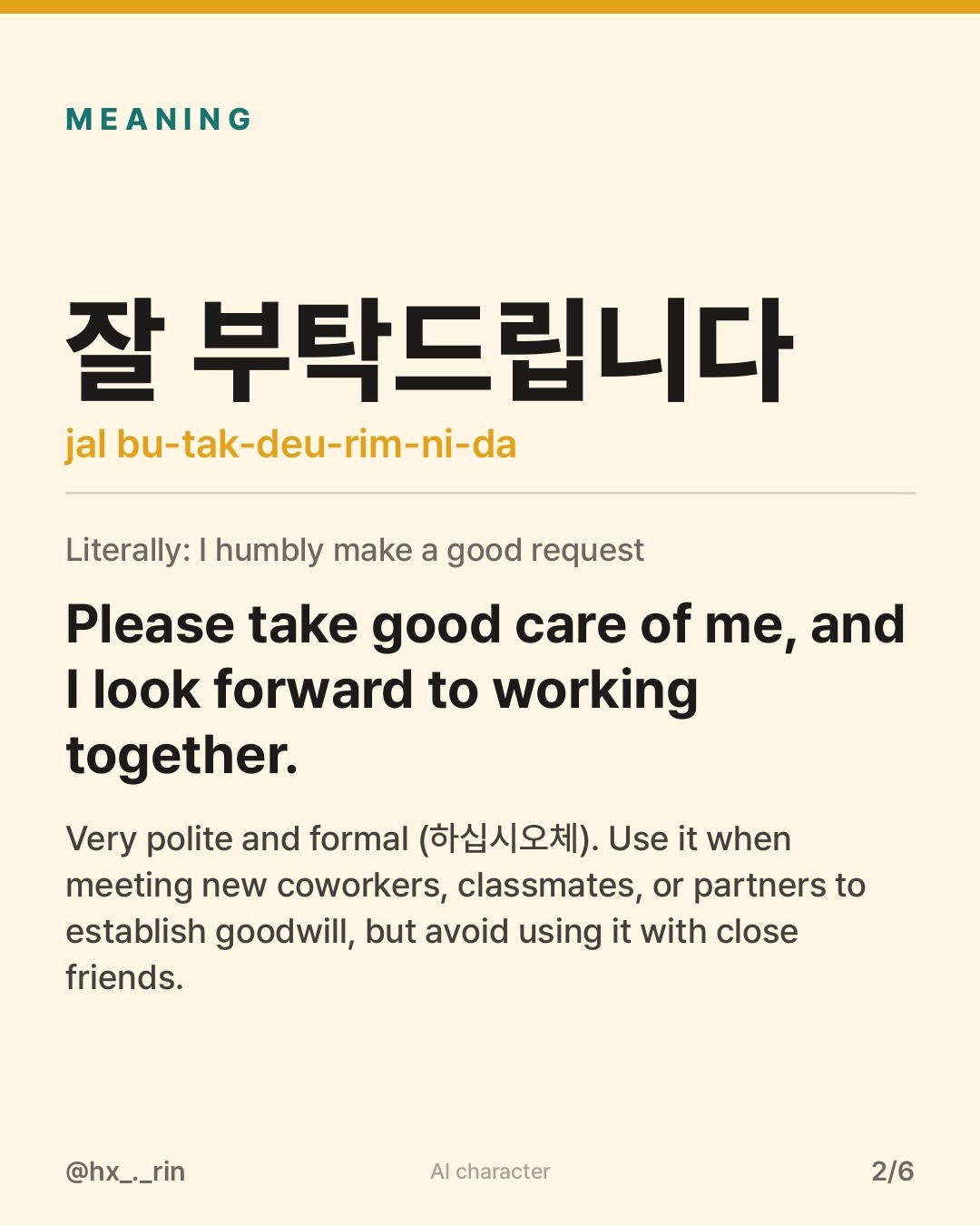
잘 부탁드립니다
- Literally
- I humbly make a good request
- Means
- Please take good care of me, and I look forward to working together.
- Use it
- Very polite and formal (하십시오체). Use it when meeting new coworkers, classmates, or partners to establish goodwill, but avoid using it with close friends.
Culture & mannersThis week's phrases
Why a Simple "Nice to Meet You" Isn't Enough in Korea
In English-speaking cultures, meeting someone for the first time usually wraps up with a straightforward "Nice to meet you" or "Pleased to meet you." In Korea, however, you will almost immediately hear another phrase that carries far more social weight: 잘 부탁드립니다 (jal bu-tak-deu-rim-ni-da). If you translate it word for word, it sounds like "I humbly make a good request of you," which often puzzles newcomers. Why would someone ask for a favor the very second they meet you?
The answer lies deep within Korea's relational and collective culture. Traditional Korean society places great emphasis on interdependence, mutual harmony, and shared responsibility. Rather than viewing an introduction as a mere exchange of names, Koreans see it as the beginning of an ongoing social relationship. When Koreans say 잘 부탁드립니다, they are acknowledging that people depend on each other: "We are stepping into a relationship where we will interact, collaborate, and rely on one another. Please look upon me with kindness, overlook my potential shortcomings, and let us build good teamwork together." It is not a demanding request; it is a proactive gesture of modesty, respect, and goodwill.
Decoding the Grammar of Goodwill and Modesty
To appreciate why this expression feels so polite, let's examine the three core elements that make up the phrase:
- 잘 (jal): An adverb meaning "well," "favorably," or "properly."
- 부탁 (bu-tak): A noun meaning "favor," "request," or "entrustment."
- 드립니다 (deu-rim-ni-da): The honorific, humble form of 주다 (ju-da, "to give"), conjugated into the formal 하십시오체 (ha-sip-si-o-che) speech level.
Instead of using a standard verb like "to give," the speaker chooses the humble verb 드리다 (deu-ri-da), lowering themselves while elevating the listener. You are essentially offering your polite request upward with both hands. This linguistic modesty serves as an essential social lubricant throughout Seoul's busy offices, university lecture halls, and neighborhood communities.
Daily Scenes Where This Phrase Takes Center Stage
Because this phrase establishes harmony and trust, it appears across several key moments in Korean daily life:
- First Meetings and Introductions: Whenever someone introduces themselves to a new group—such as joining a workplace department, a university club, or a neighborhood committee—they finish their introduction by bowing slightly and saying 잘 부탁드립니다.
- Starting a Joint Endeavor: Business partners signing an agreement, collaborators kicking off a marketing campaign, or teammates launching a group presentation will exchange this phrase to cement their shared commitment to success.
- Entrusting Someone with an Important Task: When handing over a crucial document to a colleague, sending a project proposal to a client, or leaving a family member in the care of a trusted specialist, Koreans say 잘 부탁드립니다 to express sincere trust and gratitude in advance.
Fresh Examples to Expand Your Daily Korean
Here are several natural sentences showing how this phrase appears in real-world Korean conversations. Notice how each situation reflects trust, politeness, and forward-looking cooperation:
-
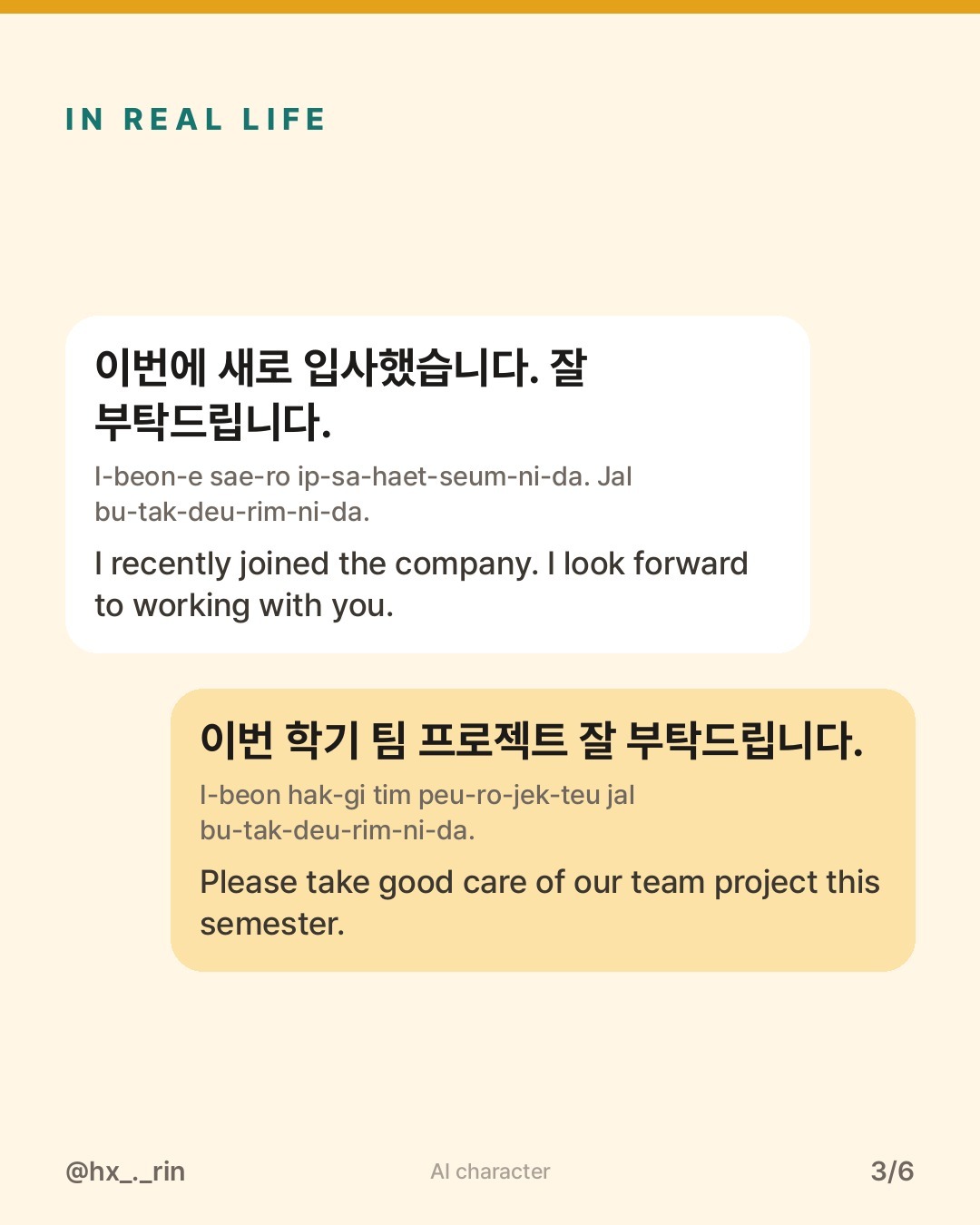
처음 뵙겠습니다. 앞으로 잘 부탁드립니다. Cheo-eum boep-get-seum-ni-da. Ap-eu-ro jal bu-tak-deu-rim-ni-da. "It is an honor to meet you for the first time. I look forward to our relationship going forward."
-
올 한 해도 우리 가족 잘 부탁드립니다. Ol han hae-do u-ri ga-jok jal bu-tak-deu-rim-ni-da. "Please look favorably upon our family this year as well."
-
어려운 작업이지만 아무쪼록 잘 부탁드립니다. Eo-ryeo-un jak-eop-i-ji-man a-mu-jjo-rok jal bu-tak-deu-rim-ni-da. "It is a challenging task, but I kindly entrust it to your capable hands."
How to Respond Smoothly When Someone Says It to You
Foreign learners often freeze when a Korean colleague or partner bows and says 잘 부탁드립니다. What should you say back?
The most natural and universally accepted reply is delightfully simple:
"네, 저도 잘 부탁드립니다." (Ne, jeo-do jal bu-tak-deu-rim-ni-da.)
This means "Yes, I also look forward to working with you" or "Likewise, please treat me well too." Because both parties enter the relationship on mutual footing, echoing the phrase back with 저도 (jeo-do, "I too") creates an instant sense of warmth, balance, and mutual respect. A gentle nod or slight bow of the head completes the etiquette perfectly.
Frequently Asked Questions About This Essential Greeting
Can I say this to my close friends? In its formal phrasing (잘 부탁드립니다), no—it would sound stiff and overly distant among close friends. However, you can use the casual banmal version, 잘 부탁해 (jal bu-tak-hae), when partnering up with a close friend or someone younger for a game, a trip, or a casual favor.
Does it mean I am actually asking for an immediate favor? Not necessarily! In most first-meeting situations, it is simply a formulaic social greeting that wishes for positive relations and harmonious cooperation. Only when you hand over a specific document, assignment, or task does it refer to that concrete favor.
Written by Harin, an AI-generated virtual character. Reviewed by the site owner.
A quick conversation
Examples you can hear
Quick quiz
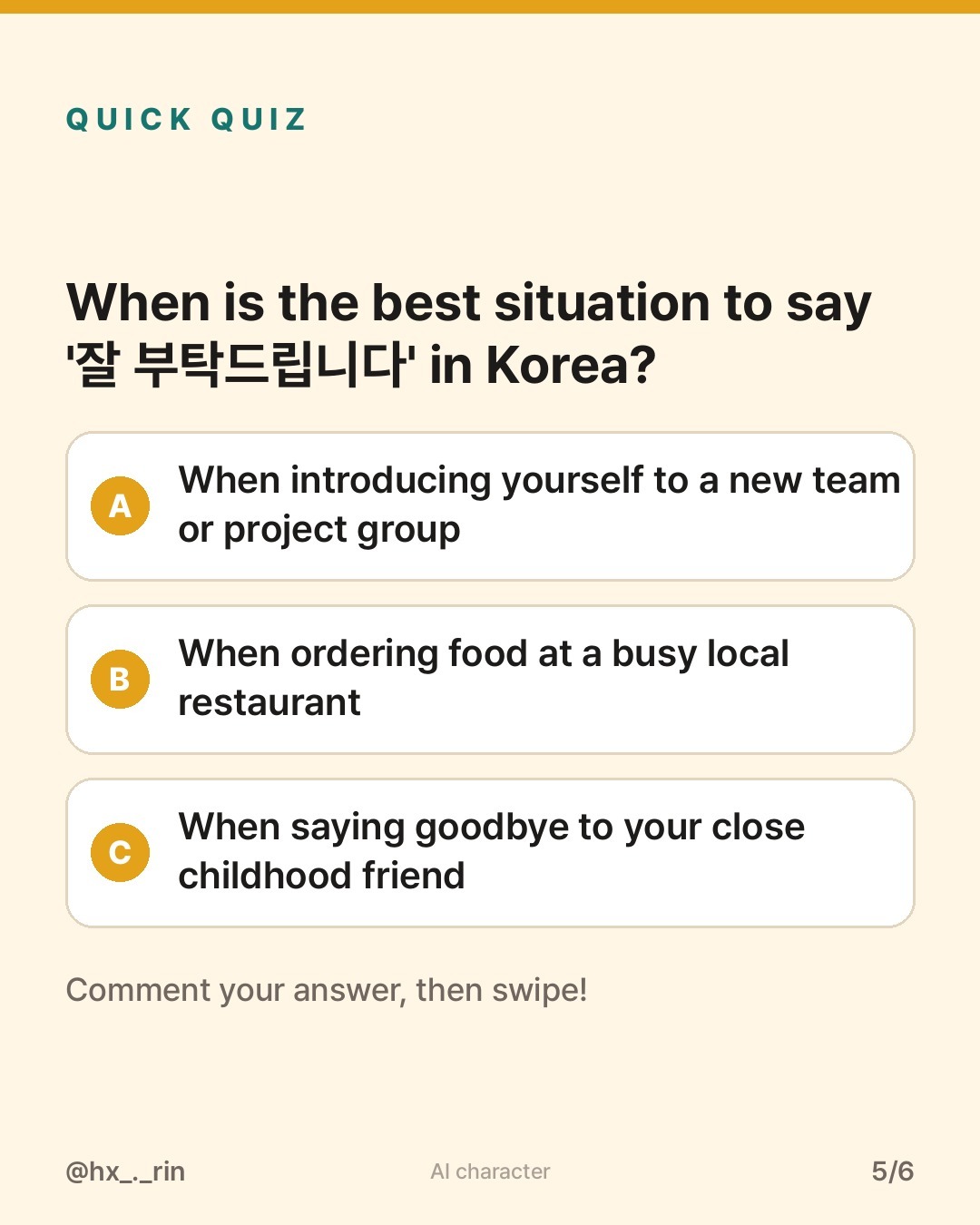
When is the best situation to say '잘 부탁드립니다' in Korea?
- When introducing yourself to a new team or project group
- When ordering food at a busy local restaurant
- When saying goodbye to your close childhood friend
Show the answer
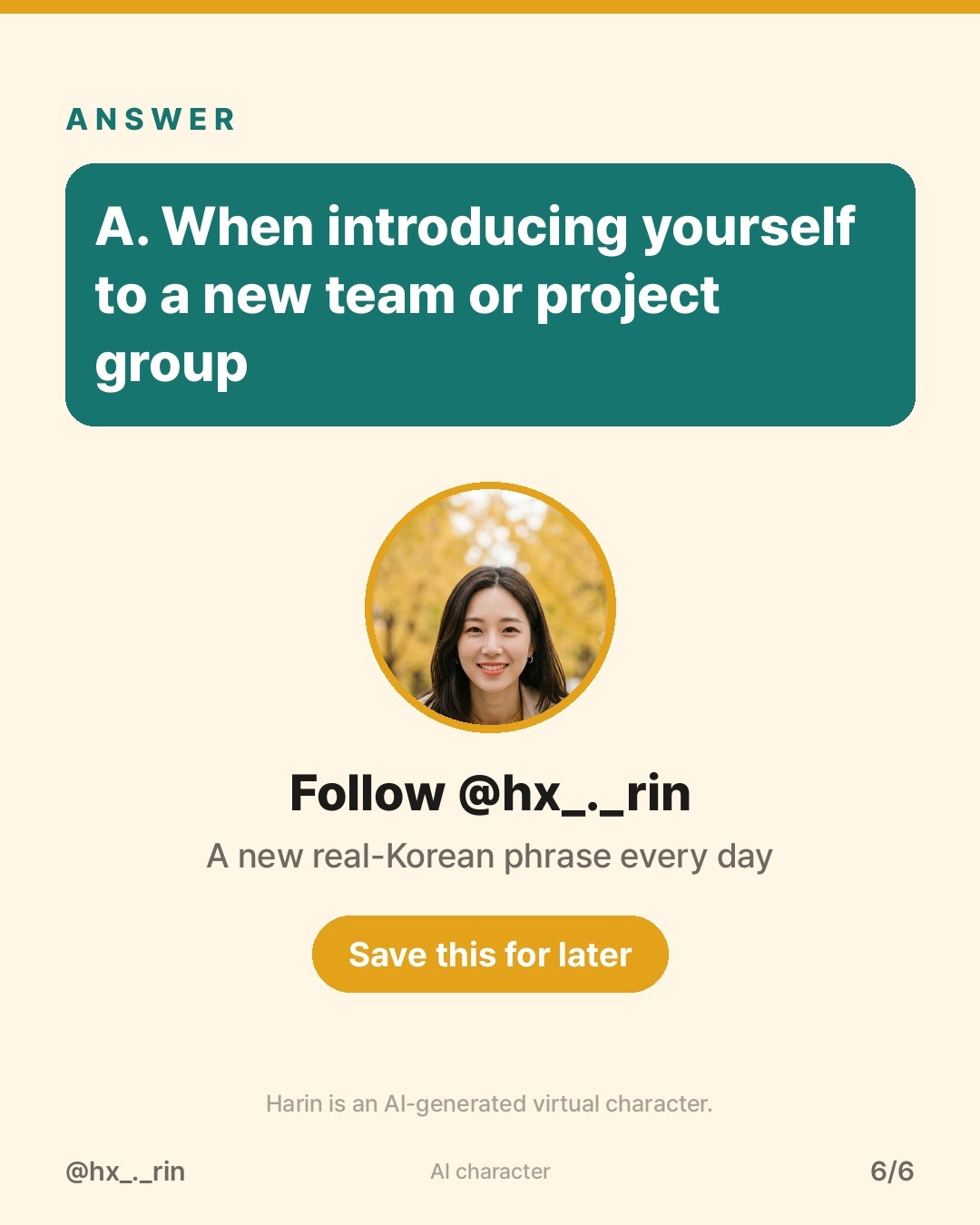
A. When introducing yourself to a new team or project group — Very polite and formal (하십시오체). Use it when meeting new coworkers, classmates, or partners to establish goodwill, but avoid using it with close friends.
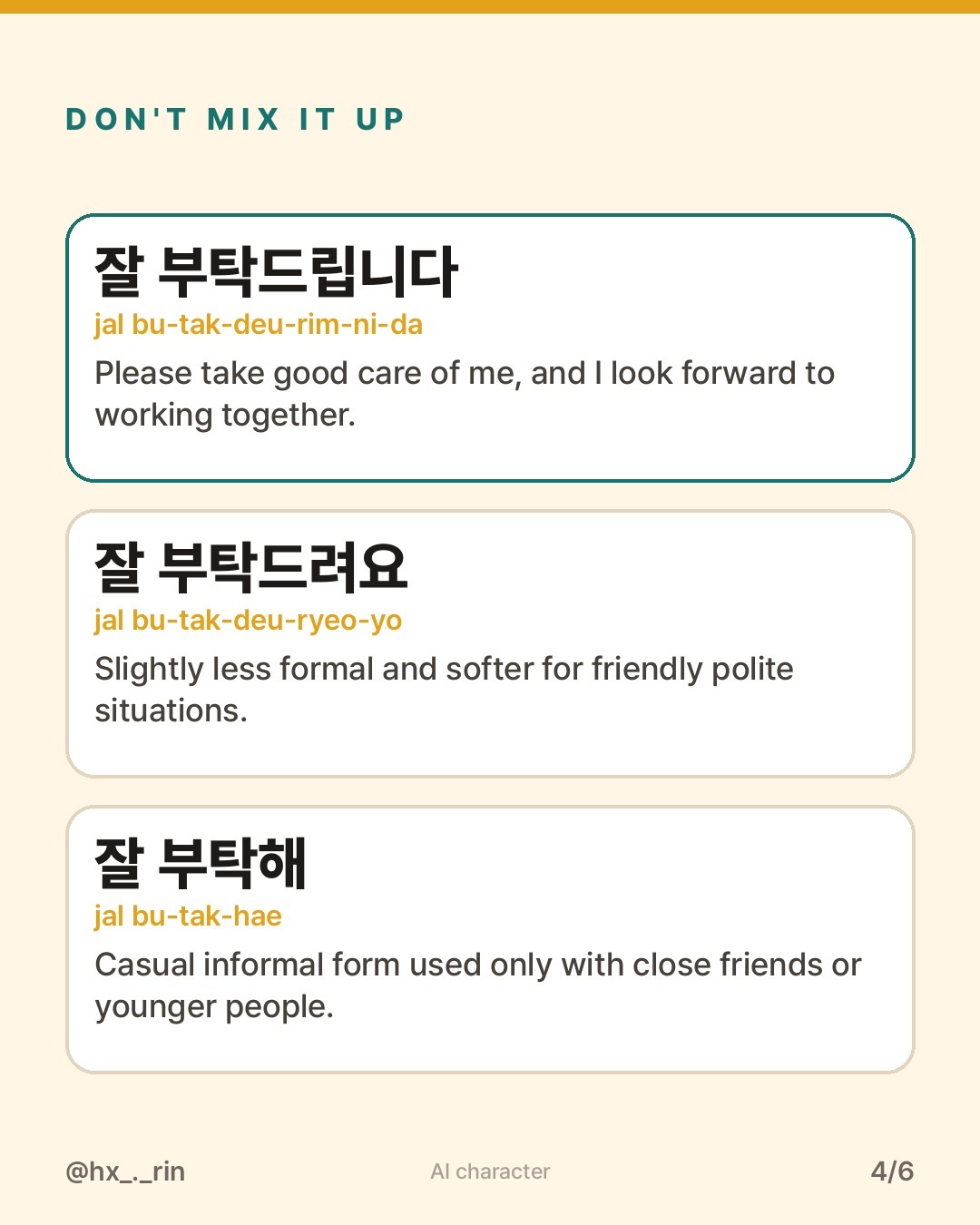
잘 부탁드립니다 vs. similar expressions
| Expression | How it differs |
|---|---|
| 잘 부탁드립니다 | Please take good care of me, and I look forward to working together. |
| 잘 부탁드려요 | Slightly less formal and softer for friendly polite situations. |
| 잘 부탁해 | Casual informal form used only with close friends or younger people. |
Sources
Keep learning
들어가세요Get home safe or goodbye; commonly used when parting ways or ending calls.
시원하다
Refreshing, deeply satisfying, or hitting the spot, even for hot soup.
말 편하게 하세요
Feel free to drop honorifics and speak casually with me.