What Does '밥 먹었어요?' Mean in Korean? (Bap Meogeosseoyo)
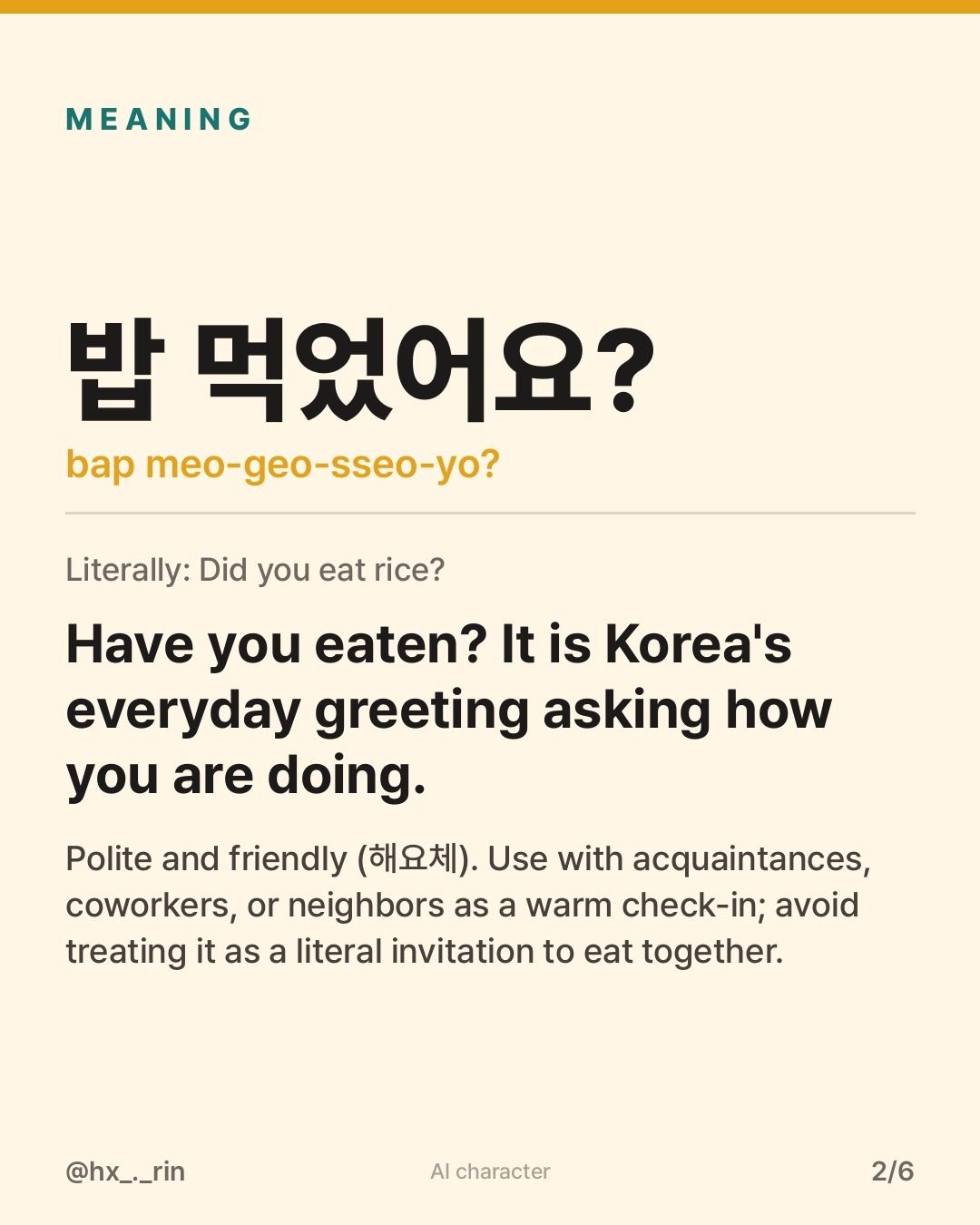
밥 먹었어요?
- Literally
- Did you eat rice?
- Means
- Have you eaten? It is Korea's everyday greeting asking how you are doing.
- Use it
- Polite and friendly (해요체). Use with acquaintances, coworkers, or neighbors as a warm check-in; avoid treating it as a literal invitation to eat together.
Culture & mannersThis week's phrases
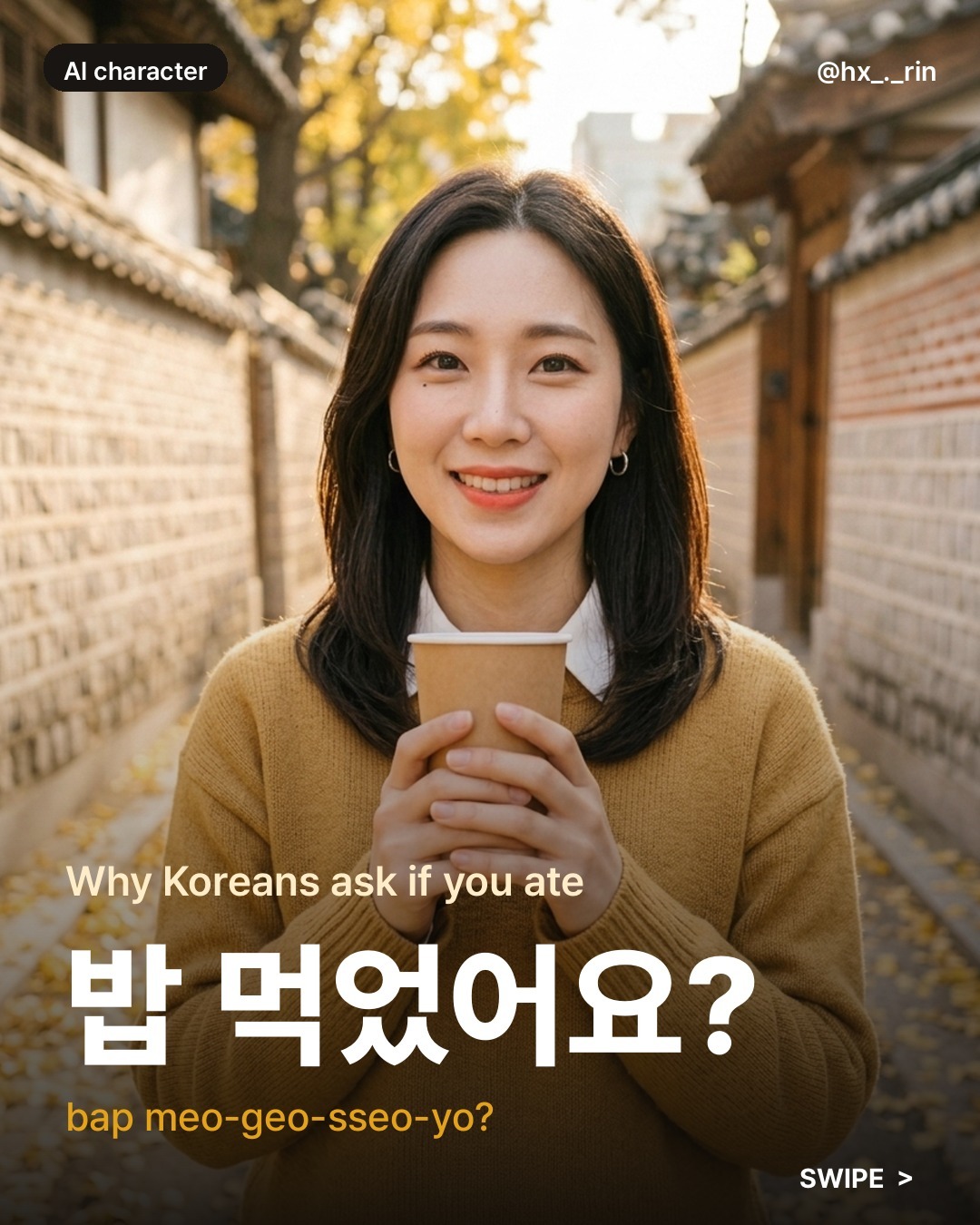
The Lunch Invitation That Wasn't: A Classic Learner Misunderstanding
Imagine arriving at your office in Seoul. Your Korean coworker walks past, offers a friendly wave, and asks with genuine warmth:
"밥 먹었어요?" (bap meo-geo-sseo-yo?)
Your mind immediately shifts into high gear. In English, asking if someone has eaten usually introduces a meal invitation. You wonder: Are they asking me to grab lunch right now? Should I clear my schedule?
If you eagerly reply, "No, I haven't eaten yet!" expecting them to suggest a restaurant, you will probably be met with an awkward pause. Alternatively, some learners treat the question like a medical diary, explaining: "Well, I woke up late, ate half an apple, and drank coffee..."
Both reactions stem from the number one mistake Korean learners make: taking 밥 먹었어요? literally.
To Koreans, this phrase is rarely an inquiry about your meal schedule, and it is almost never a surprise lunch invitation. Instead, it is one of the most culturally loaded greetings in the Korean language—the Seoul equivalent of asking, "How are you doing today?"
Where Did It Come From? Why Food Means Care in Korea
To understand why Koreans greet each other with questions about food, you have to look into the country's social history. Throughout much of the twentieth century, including the Korean War and the rebuilding decades that followed, food scarcity was a harsh daily reality. Going without a meal was common, and hunger was a constant threat.
Under those circumstances, checking whether your neighbor or friend had managed to eat was the most direct, compassionate way to ask if they were surviving and in good health.
While South Korea has since transformed into an economic and cultural powerhouse, the emotional weight of food remains deeply woven into society. Asking whether someone has eaten shows that you care about their physical and emotional well-being. It reflects what Koreans call jeong (정)—a deep sense of warmth, empathy, and mutual connection.
When a local asks you 밥 먹었어요?, they are simply saying: "I see you, I care about you, and I hope you are having a healthy day."
The "Starvation Alarm": How Natives Actually Respond
What should you say when someone asks you this in an elevator or office hallway?
If you have eaten anything at all—even a quick morning snack—the most natural response is simple:
- 네, 먹었어요! (ne, meo-geo-sseo-yo!) — "Yes, I ate!"
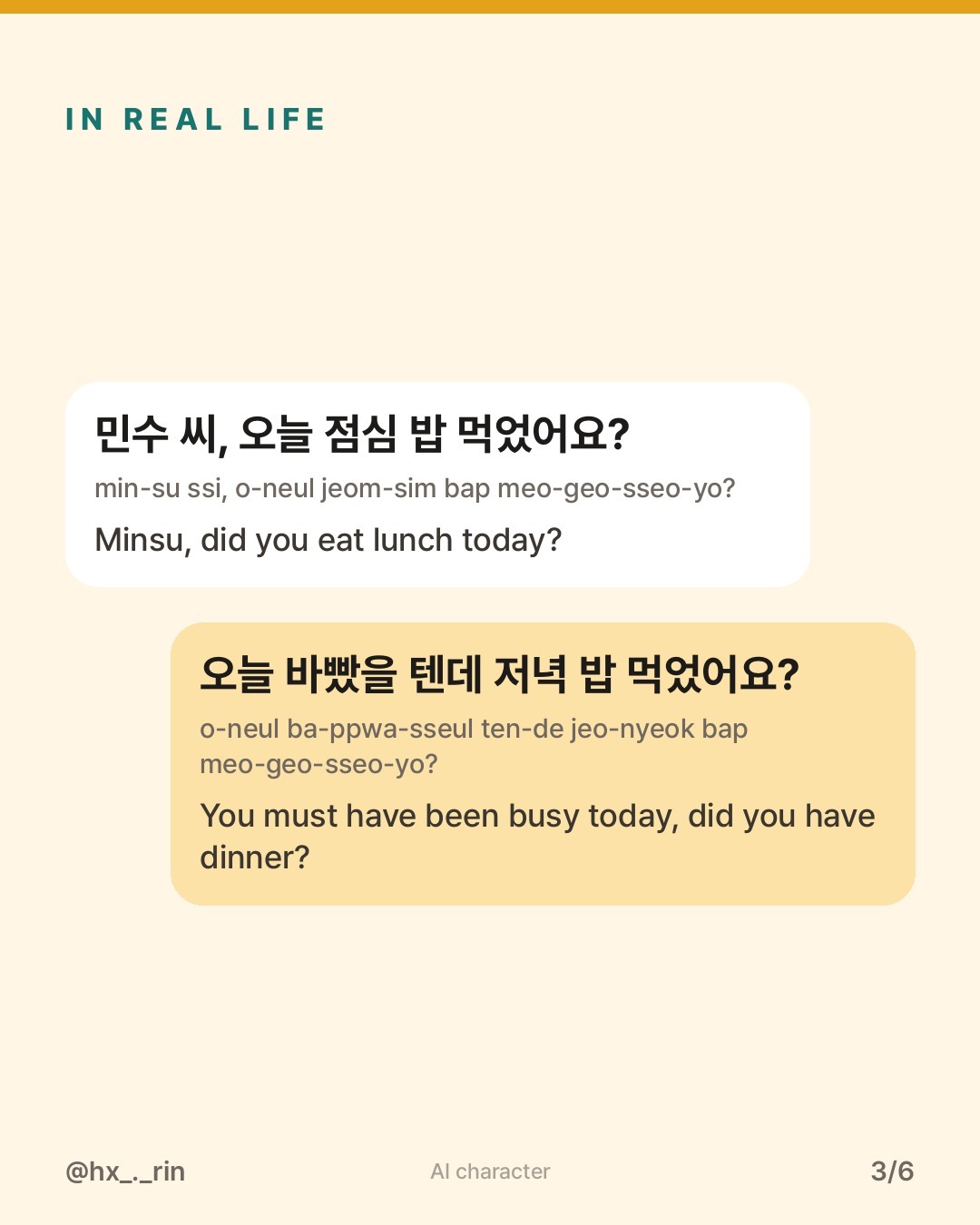
You can return the courtesy by asking: "네, 먹었어요. 민수 씨는 밥 먹었어요?" (Yes, I ate. Did you eat, Minsu?).
What if you haven't eaten? Here is where cultural nuance matters. If you bluntly say "아니요, 안 먹었어요" (No, I didn't eat), you might trigger what locals jokingly call the "starvation alarm." Because food equals well-being, hearing that a peer has skipped a meal often makes Koreans feel instinctively worried. They might rush to offer snacks or feel guilty for not feeding you.
If you haven't eaten but want to keep the greeting polite and stress-free, say:
- 아직 안 먹었는데, 이따가 먹으려고요. (a-jik an meo-geon-neun-de, i-tta-ga meo-geu-ryeo-go-yo.) — "Not yet, but I'm planning to eat later."
This reassures the listener that you are taking care of yourself.
Knowing Your Speech Levels: From Bosses to Best Friends
Because this greeting is so fundamental, you should match your politeness level to the relationship:
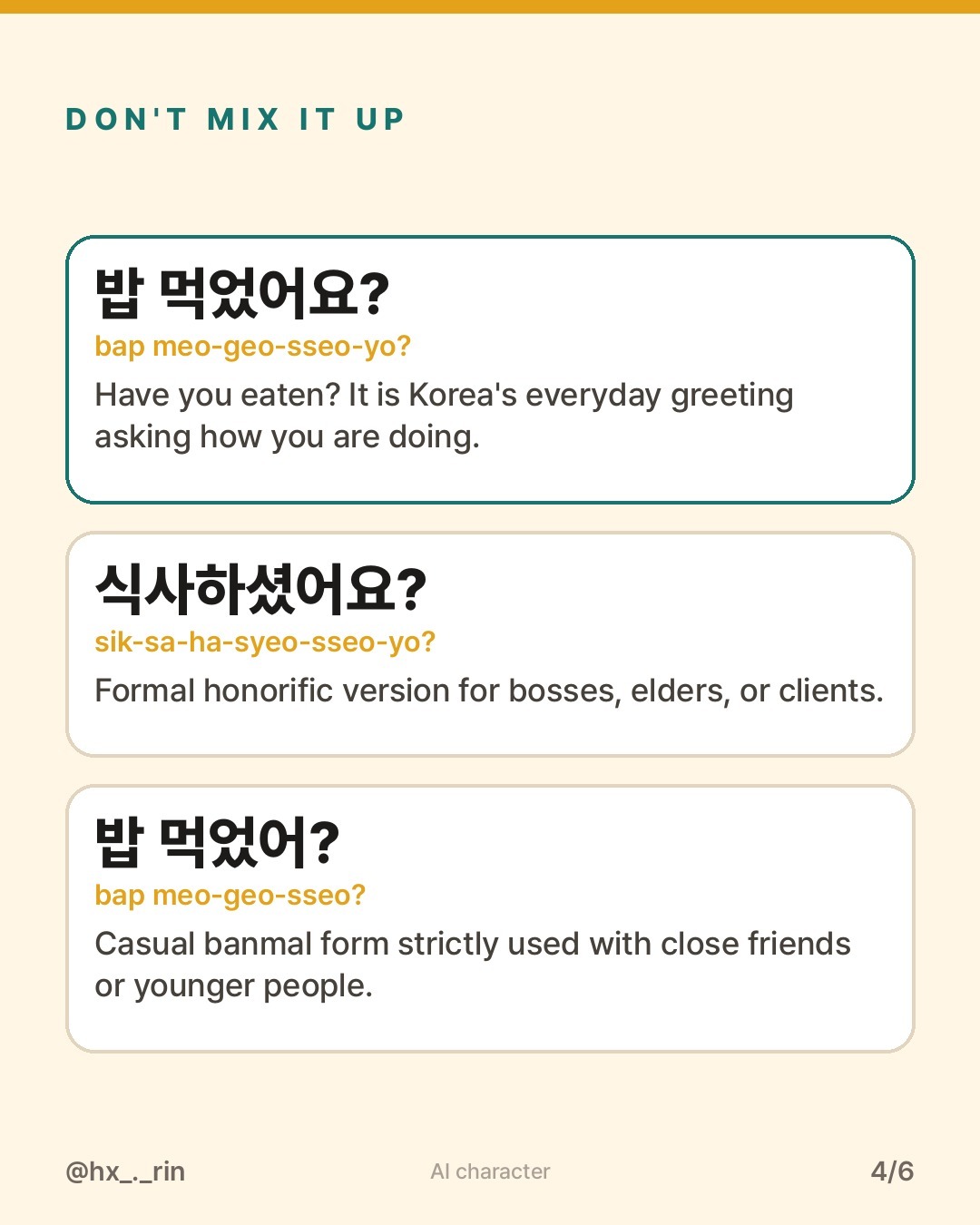
- 밥 먹었어요? (bap meo-geo-sseo-yo?): Standard polite (haeyo-che). Perfect for coworkers of similar rank, neighbors, and casual acquaintances.
- 식사하셨어요? (sik-sa-ha-syeo-sseo-yo?): High honorific polite. Replaces bap with the honorific noun 식사 (sik-sa) and uses the honorific verb suffix -시-. Use this with managers, professors, clients, and elders.
- 밥 먹었어? (bap meo-geo-sseo?): Informal casual (ban-mal). Use only with close friends of the same age or younger people.
Remember: never use honorifics to describe your own actions! If your boss asks "식사하셨어요?", reply with "네, 먹었습니다" or "네, 먹었어요", never "네, 식사하셨어요".
Fresh Practice Sentences for Real Daily Conversations
Here are three authentic ways to use this expression naturally in everyday Seoul life:
-
아침에 늦잠 자서 밥 못 먹었어요.
a-chi-me neut-jam ja-seo bap mot meo-geo-sseo-yo.
"I overslept this morning, so I couldn't eat." -
걱정해 주셔서 감사해요, 방금 든든하게 밥 먹었어요.
geok-jeong-hae ju-syeo-seo gam-sa-hae-yo, bang-geum deun-deun-ha-ge bap meo-geo-sseo-yo.
"Thank you for caring, I just had a hearty meal." -
다들 바빠도 밥 잘 챙겨 먹었어요?
da-deul ba-ppa-do bap jal chaeng-gyeo meo-geo-sseo-yo?
"Even though everyone is busy, did you all make sure to eat well?"
The Golden Rules: Do’s and Don’ts
To navigate Korean greeting culture smoothly, keep this checklist in mind:
- DO treat it as a greeting, similar to "How are you doing today?"
- DO reply with a warm smile and a quick "네, 먹었어요!" to keep the conversation light.
- DO return the question by asking "식사하셨어요?" to seniors or "밥 먹었어요?" to peers.
- DON'T assume it is a meal invitation unless they specify a restaurant, date, or time.
- DON'T recite a detailed food diary—natives are asking after your well-being, not your diet.
- DON'T sound distressed if you skipped a meal; simply add that you will eat soon.
- DON'T use honorifics on yourself when responding to elders.
Next time someone in Korea asks if you have eaten, skip the confusion! Smile, say "네, 먹었어요!", and enjoy this warm piece of everyday Korean culture.
Written by Harin, an AI-generated virtual character. Reviewed by the site owner.
밥 먹었어요? vs. similar expressions
| Expression | How it differs |
|---|---|
| 밥 먹었어요? | Have you eaten? It is Korea's everyday greeting asking how you are doing. |
| 식사하셨어요? | Formal honorific version for bosses, elders, or clients. |
| 밥 먹었어? | Casual banmal form strictly used with close friends or younger people. |
Examples you can hear
A quick conversation
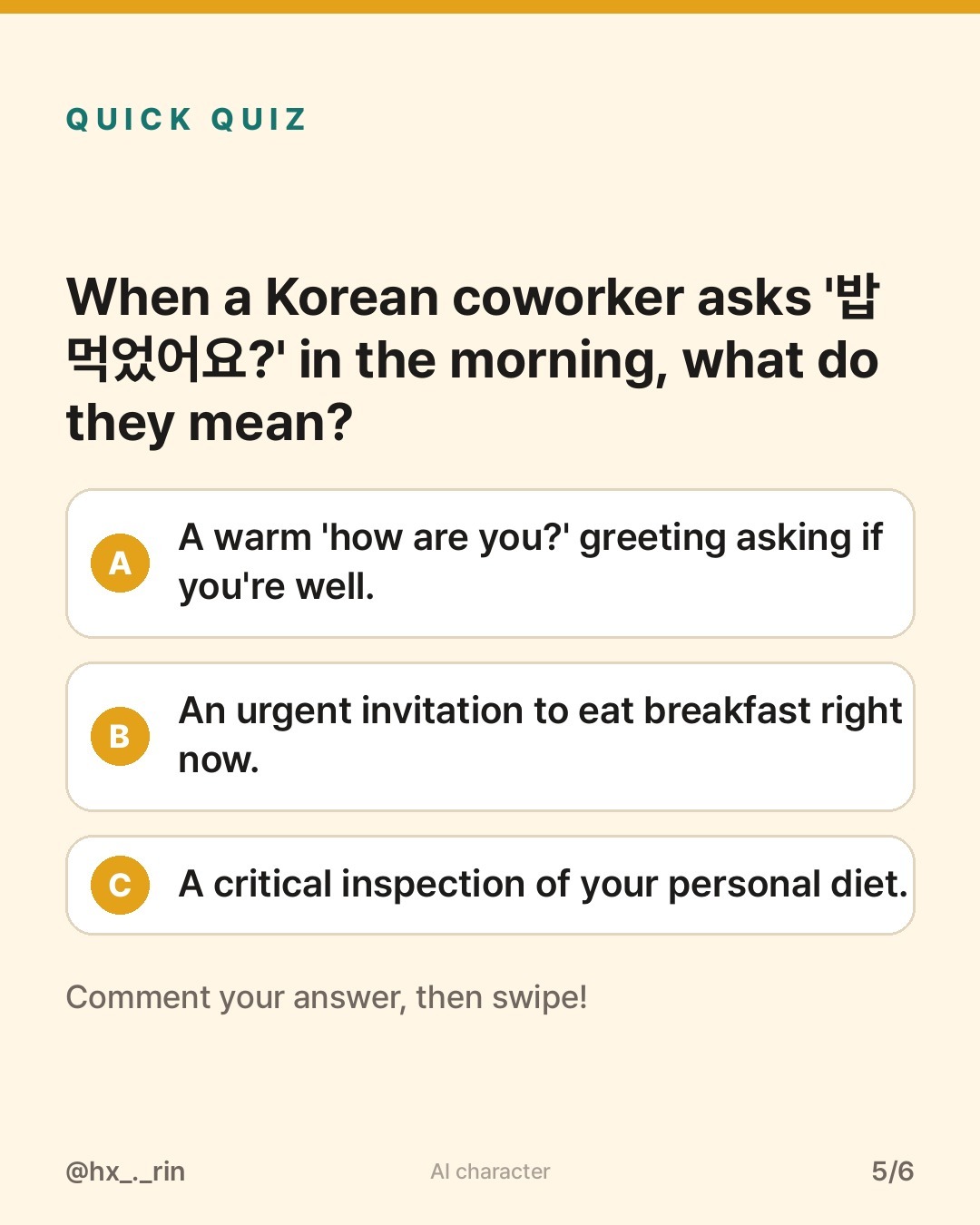
Quick quiz
When a Korean coworker asks '밥 먹었어요?' in the morning, what do they mean?
- A warm 'how are you?' greeting asking if you're well.
- An urgent invitation to eat breakfast right now.
- A critical inspection of your personal diet.
Show the answer
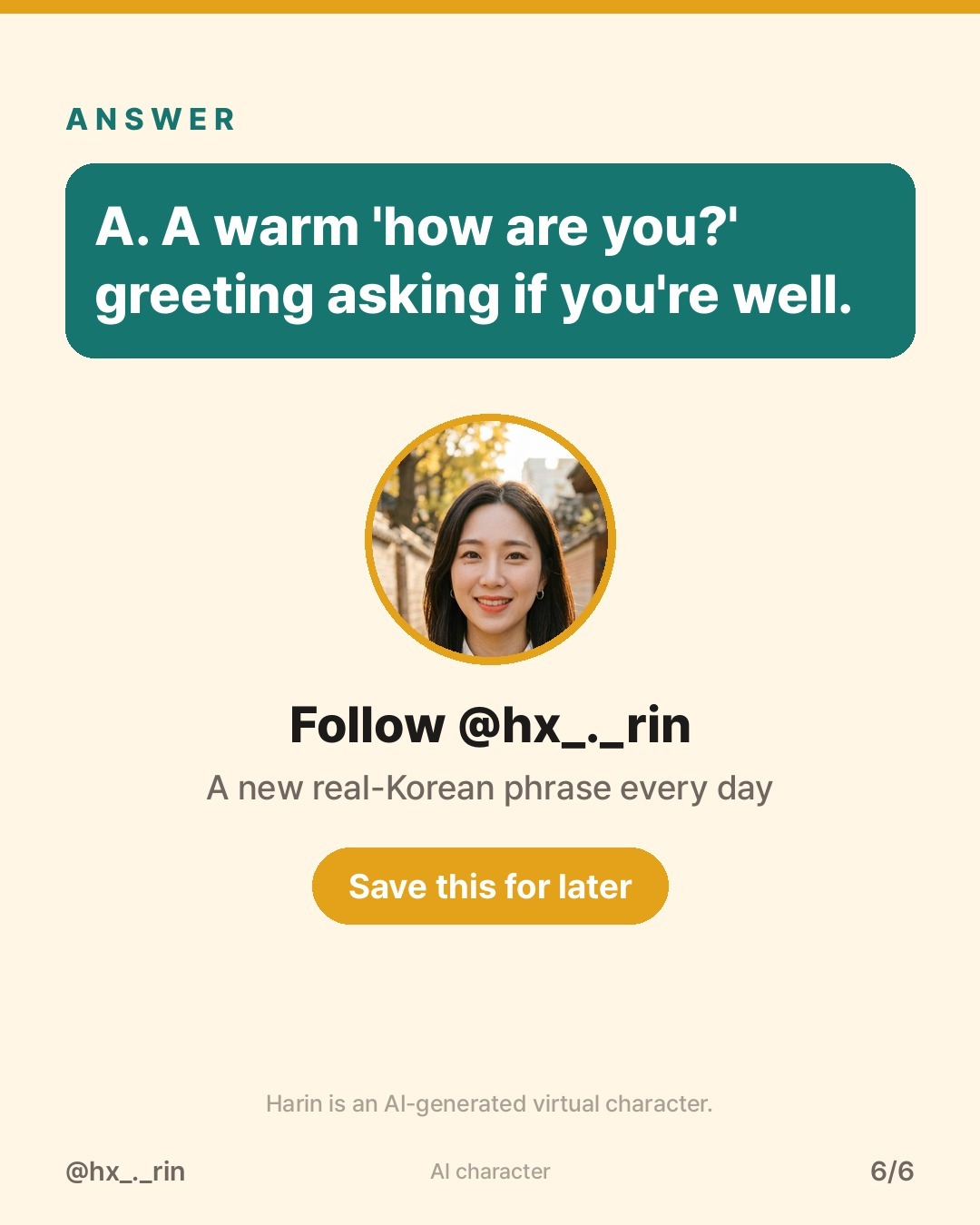
A. A warm 'how are you?' greeting asking if you're well. — Polite and friendly (해요체). Use with acquaintances, coworkers, or neighbors as a warm check-in; avoid treating it as a literal invitation to eat together.
Sources
- https://stdict.korean.go.kr
- https://talktomeinkorean.com
- https://www.90daykorean.com/have-you-eaten-in-korean/
Keep learning
몇 년생이세요?What year were you born? (polite way to ask age)
몇 년생이세요?
What year were you born?
잘 부탁드립니다
Please take good care of me, and I look forward to working together.